Pregnant vs menopause refers to two different stages of reproductive health. Pregnancy is the period when a baby develops in the uterus, while menopause is the natural stage when menstrual periods permanently stop because of changes in reproductive hormones.
These terms are not interchangeable, and understanding the difference helps people discuss reproductive health more accurately.
Pregnancy can occur when a person is still ovulating, including during the years leading up to menopause. Menopause, by contrast, is confirmed after someone has gone 12 consecutive months without a menstrual period, provided there is no other medical explanation.
The transition leading up to menopause is called perimenopause, and periods may become irregular during this time.
Some signs of pregnancy and perimenopause can overlap, including missed periods, tiredness, and changes in mood. Therefore, symptoms alone cannot reliably tell someone which condition is occurring.
In this guide, you will learn the meaning of pregnancy and menopause, their differences, common signs, important facts, and common misconceptions.
Quick Answer: Pregnant or Menopause?
Pregnancy and menopause are different reproductive conditions.
- Pregnant: A person is carrying a developing baby in the uterus.
- Menopause: Menstrual periods have permanently stopped because of the natural decline in reproductive hormone activity.
- Perimenopause: The transition leading up to menopause, when periods and hormone levels may fluctuate.
Important: A missed period does not automatically mean pregnancy or menopause. If pregnancy is possible, a pregnancy test is the practical first step. A healthcare professional can help determine the cause of irregular or absent periods.
Definition and Meaning of Menopause and Pregnancy
What Does Pregnant Mean?
Pregnant describes a person who is carrying a developing embryo or fetus in the uterus. Pregnancy usually begins after fertilization and implantation, and it typically lasts about 40 weeks when counted from the first day of the last menstrual period.
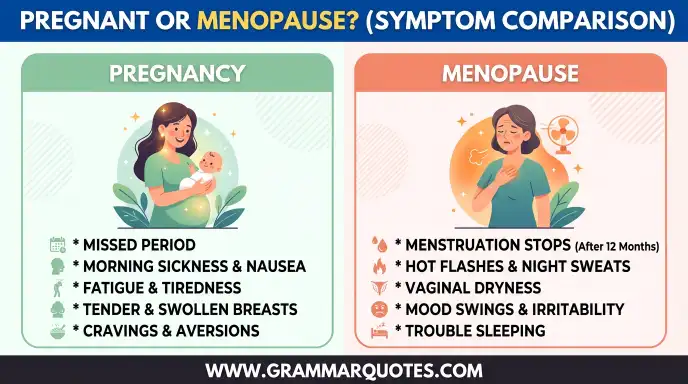
Common early signs may include:
- A missed period
- Nausea or vomiting
- Breast tenderness
- Fatigue
- Frequent urination
- Changes in appetite or sensitivity to smells
Not everyone experiences these signs, and some symptoms can also occur for other reasons. A pregnancy test can help determine if pregnancy is present.
What Does Menopause Mean?
Menopause is a natural stage of life when menstrual periods stop permanently because the ovaries’ reproductive activity declines. It is generally identified after 12 consecutive months without a period, when the absence of menstruation is not caused by another condition, medication, or treatment.
Menopause commonly occurs between ages 45 and 55, although timing varies.
Possible symptoms include:
- Hot flashes
- Night sweats
- Irregular periods during the transition
- Sleep difficulties
- Vaginal dryness
- Mood changes
- Changes in sexual comfort or desire
Not everyone experiences the same symptoms, and their intensity can vary.
What Is Perimenopause?
Perimenopause is the transition before menopause. Hormone levels fluctuate during this time, and menstrual cycles may become shorter, longer, lighter, heavier, or less predictable.
Pregnancy can still occur during perimenopause if ovulation continues. Therefore, someone experiencing irregular periods should not assume that pregnancy is impossible.
Pregnant vs Menopause: Key Differences
| Feature | Pregnancy | Menopause |
| Meaning | A developing baby is growing in the uterus | Menstrual periods have permanently stopped |
| Main reproductive change | Pregnancy develops after conception and implantation | Ovarian reproductive activity declines |
| Periods | Usually stop during pregnancy | Stop permanently after menopause |
| Fertility | Pregnancy is occurring | Natural pregnancy is no longer expected after menopause |
| Hormones | Pregnancy related hormones rise | Estrogen levels generally decline |
| Possible symptoms | Nausea, breast tenderness, fatigue | Hot flashes, night sweats, vaginal dryness |
| Pregnancy test | Can usually detect pregnancy hormone hCG | Does not diagnose menopause |
| Confirmation | Pregnancy test and, when appropriate, clinical assessment | Menstrual history and medical assessment when needed |
Remember: Some symptoms overlap. The table describes common patterns, not a way to diagnose either condition based on symptoms alone.
Can You Get Pregnant During Perimenopause?
Yes, pregnancy is possible during perimenopause. Although fertility declines with age, ovulation may still occur until menopause is reached.
During perimenopause, periods can become irregular because hormone levels fluctuate. However, an irregular cycle does not prove that ovulation has stopped.
If pregnancy is not desired, discuss suitable contraception with a healthcare professional. The appropriate time to stop contraception depends on age, medical history, and individual circumstances.
Can You Get Pregnant After Menopause?
After natural menopause, pregnancy through natural ovulation is not expected because ovulation has permanently ceased. However, pregnancy may sometimes be possible with assisted reproductive treatments, depending on the person’s health and circumstances.
Anyone considering pregnancy after menopause should seek specialist medical advice.
Pregnant and Menopause: Symptoms That Can Overlap
Some symptoms may occur in both early pregnancy and perimenopause. This can make it difficult to identify the cause without testing or medical assessment.
1. Missed or Irregular Periods
A missed period can be an early sign of pregnancy. During perimenopause, periods may also become irregular or stop for several months before returning.
If pregnancy is possible, do not assume that a missed period means menopause.
2. Fatigue
Fatigue can occur during pregnancy because of hormonal changes and the body’s increased demands. Sleep disruption during perimenopause can also cause tiredness.
Fatigue alone cannot distinguish between these conditions.
3. Mood Changes
Hormonal changes, stress, and sleep difficulties may contribute to mood changes during both pregnancy and perimenopause.
Mood changes are not a reliable way to confirm pregnancy or menopause.
4. Breast Changes
Breast tenderness can occur during early pregnancy. Some people also experience breast discomfort during hormonal fluctuations in perimenopause.
A pregnancy test is more useful than comparing this symptom alone.
5. Sleep Problems
Pregnancy may affect sleep because of discomfort, nausea, or frequent urination. Perimenopause and menopause can affect sleep through night sweats, hot flashes, or other changes.
If sleep problems are persistent or disruptive, a healthcare professional can help identify possible causes.
How to Tell if It Is Pregnancy or Menopause
Symptoms alone cannot reliably confirm pregnancy or menopause. The next step depends on if pregnancy is possible and how long periods have been absent.
Step 1: Consider if Pregnancy Is Possible
If there has been sexual activity that could result in pregnancy, pregnancy should be considered even if periods have become irregular.
Step 2: Take a Pregnancy Test if Appropriate
A home pregnancy test is generally most reliable from the first day of a missed period. If you do not know when your next period is due, follow the test instructions; testing at least 21 days after the last unprotected sex is a useful guideline.
If the result is negative but pregnancy is still possible, repeat the test after a few days or contact a healthcare professional.
Step 3: Track Menstrual Changes
Keep a record of period dates, flow, and symptoms. This information can help a healthcare professional understand if the pattern may be related to perimenopause or another cause.
Step 4: Seek Medical Advice When Needed
A healthcare professional may assess menstrual history, symptoms, medications, and other health factors. Depending on age and circumstances, they may recommend testing to investigate other causes of missed periods.
Seek urgent medical care if possible pregnancy is accompanied by severe abdominal or pelvic pain, heavy bleeding, fainting, or significant dizziness.
Common Misconceptions About Pregnancy and Menopause
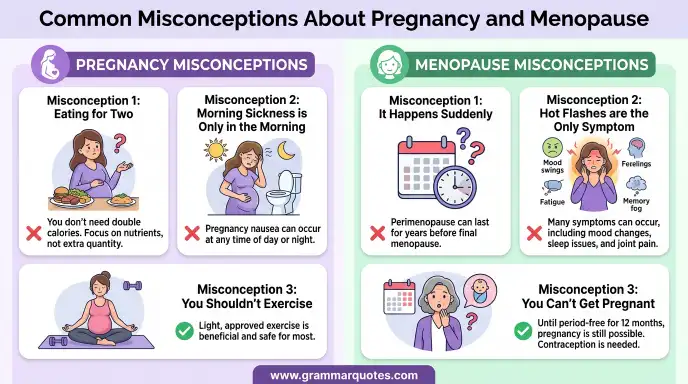
1. A Missed Period Always Means Menopause
Incorrect. Missed periods can result from pregnancy, perimenopause, stress, changes in weight, hormonal conditions, or other medical causes.
2. Pregnancy Is Impossible During Perimenopause
Incorrect. Ovulation may continue during perimenopause, so pregnancy is still possible.
3. Hot Flashes Always Mean Menopause
Incorrect. Hot flashes are common during perimenopause and menopause, but they can also have other causes.
4. Nausea Always Means Pregnancy
Incorrect. Nausea can result from many conditions, including digestive problems, infections, medication effects, and hormonal changes.
5. A Pregnancy Test Can Confirm Menopause
Incorrect. Pregnancy tests detect human chorionic gonadotropin (hCG), a hormone associated with pregnancy. They are not designed to diagnose menopause.
6. Menopause Happens at the Same Age for Everyone
Incorrect. The timing varies. Menopause most commonly occurs between ages 45 and 55, but it can happen earlier or later.
Pregnant vs Menopause: Frequently Asked Questions
1. What is the main difference between being pregnant and being in menopause?
Pregnancy means a baby is developing in the uterus. Menopause is the permanent end of menstrual periods due to declining reproductive function.
2. Can menopause symptoms feel like pregnancy symptoms?
Yes. Fatigue, mood changes, sleep problems, and menstrual changes can overlap. Symptoms alone cannot reliably distinguish the two.
3. Can you get pregnant during menopause?
After natural menopause is established, natural pregnancy is not expected because ovulation has ceased. However, pregnancy may be possible through certain assisted reproductive treatments.
4. Can you get pregnant during perimenopause?
Yes. Ovulation may still occur during perimenopause, so pregnancy remains possible until menopause is reached.
5. Does a missed period mean I am pregnant or in menopause?
Not necessarily. A missed period can have several causes. If pregnancy is possible, take a pregnancy test and seek medical advice if your period remains absent or irregular.
6. What is the age difference between pregnancy and menopause?
Pregnancy can occur during the reproductive years, including perimenopause. Natural menopause commonly occurs between ages 45 and 55, but individual timing varies.
7. Can you have hot flashes during pregnancy?
Some people may experience sensations of warmth during pregnancy, but hot flashes are especially associated with perimenopause and menopause. This symptom alone cannot confirm either condition.
8. How is menopause confirmed?
Menopause is generally identified after 12 consecutive months without a menstrual period, when no other cause explains the absence. The need for medical tests depends on age and individual circumstances.
9. Can a pregnancy test be negative during perimenopause?
Yes. A negative test means that hCG was not detected at the test’s threshold. If testing is too early, pregnancy may still be possible, so repeat testing or medical advice may be appropriate.
10. When should I contact a healthcare professional?
Seek advice for persistent or unexplained missed periods, troublesome menopausal symptoms, or uncertainty about pregnancy. Get urgent care for severe abdominal pain, fainting, or heavy bleeding when pregnancy is possible.
Conclusion
Pregnant vs menopause describes two different reproductive situations. Pregnancy involves a developing baby in the uterus, while menopause marks the permanent end of menstrual periods after reproductive hormone activity declines.
The main challenge is that some symptoms, such as fatigue, mood changes, and missed periods, can occur in both pregnancy and perimenopause. For this reason, symptoms alone are not enough to identify the cause.
If pregnancy is possible, use a pregnancy test at the appropriate time. If periods remain irregular or absent, or symptoms are concerning, consult a healthcare professional for advice suited to your circumstances.
Discover More Articles!
Dandruff or Psoriasis: How to Tell the Difference
Goods or Services: What’s the Difference?
Treck or Trek: Meaning, Examples, and Common Mistakes

Ethan Parker is an English-language writer known for his interest in words, language, and clear communication. His work focuses on making everyday English easier to understand through simple explanations and practical examples.