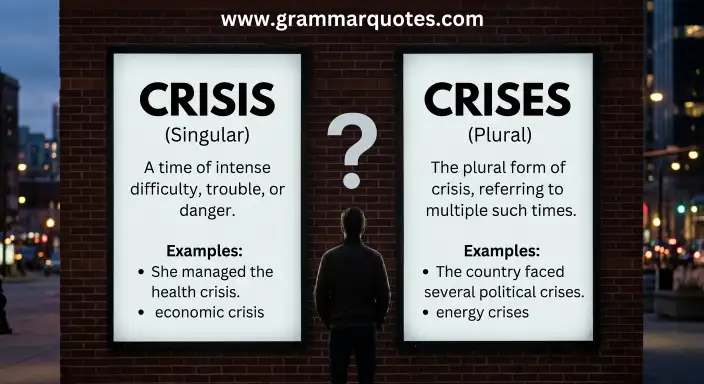
Crisis and crises are both correct English words, but they have different grammatical uses. Crisis is the singular form, meaning one serious or difficult situation, while crises is the plural form, meaning two or more serious situations.
For example, “The country is facing a crisis” refers to one difficult situation, whereas “Several countries are facing economic crises” refers to multiple situations. Understanding the difference between these words helps you avoid common spelling and grammar mistakes in everyday writing, school assignments, business reports, and professional communication.
Quick Answer: Crises vs. Crisis
- Crisis: Singular noun used for one serious or difficult situation.
- Crises: Plural noun used for more than one serious or difficult situation.
- Correct usage: Use crisis for one situation and crises for two or more situations.
Examples:
- The company is experiencing a financial crisis.
- Several companies are experiencing financial crises.
What Does Crisis Mean?
The word crisis is a noun that describes a serious, difficult, or dangerous situation that requires immediate attention or action. It can occur in personal life, business, politics, health, or other areas.
A crisis often involves uncertainty, pressure, or the need to make important decisions.
Examples of Crisis in Sentences
- The country is facing a serious economic crisis.
- The family received help during a personal crisis.
- The company developed a plan to manage the financial crisis.
- Quick action helped prevent the situation from becoming a bigger crisis.
- The government held an emergency meeting to discuss the national crisis.
In each example, crisis refers to one serious situation.
What Does Crises Mean?
Crises is the plural form of crisis. It refers to two or more serious or difficult situations.
Unlike most English nouns that form their plurals by adding s or es, crisis changes to crises. This is an irregular plural form, so its spelling must be learned.
Examples of Crises in Sentences
- The country has experienced several economic crises.
- Hospitals must prepare for public health crises.
- The organization faced multiple financial crises last year.
- History contains many political crises.
- The manager learned how to handle workplace crises effectively.
In these sentences, crises refers to multiple serious situations.
Crises vs Crisis: Key Differences
| Feature | Crisis | Crises |
| Grammatical form | Singular | Plural |
| Meaning | One serious situation | Two or more serious situations |
| Part of speech | Noun | Noun |
| Pronunciation | KRY sis | KRY seez |
| Example | A crisis occurred yesterday. | Several crises occurred last year. |
Remember: Crisis means one, while crises means more than one.
Why Is the Plural of Crisis Crises?
The plural of crisis is crises because the word comes from Greek and follows a traditional plural pattern used by certain Greek derived English nouns.
Other examples of this pattern include:
- Analysis → Analyses
- Thesis → Theses
- Diagnosis → Diagnoses
- Basis → Bases
- Crisis → Crises
These words do not form their plurals by simply adding s. Their spelling changes, so it is important to remember the correct forms.
British English vs American English
There is no difference between British and American English in the spelling or grammatical meaning of crisis and crises. Both varieties use crisis for one situation and crises for multiple situations.
| Context | British English | American English |
| One serious situation | A political crisis | A political crisis |
| Multiple serious situations | Political crises | Political crises |
| Singular spelling | Crisis | Crisis |
| Plural spelling | Crises | Crises |
Important: The distinction is grammatical, not regional. Both spellings are correct when used in the right context.
Which Word Should You Use?
Choose the word based on the number of situations you are describing.
Use Crisis for One Situation
Use crisis when referring to a single serious event or difficult situation.
Examples:
- The business is dealing with a financial crisis.
- She received support during a family crisis.
- The sudden shortage created a major crisis.
Use Crises for Multiple Situations
Use crises when referring to two or more serious events or difficult situations.
Examples:
- The organization managed several financial crises.
- Different countries faced political crises.
- The hospital prepared for possible health crises.
A helpful trick is to replace the noun with one situation or several situations. If you mean one, use crisis. If you mean several, use crises.
Common Mistakes When Using Crises and Crisis
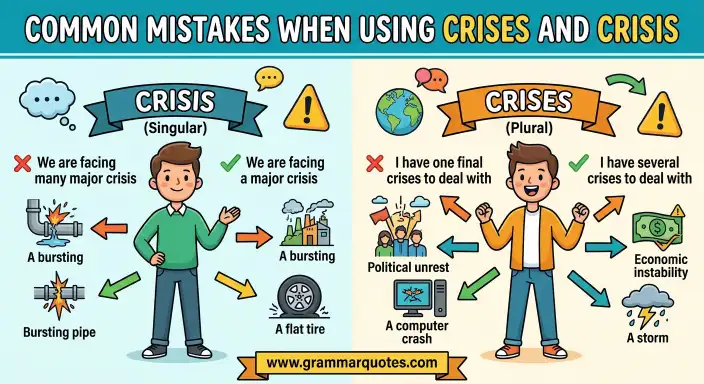
1. Using Crisis for Multiple Situations
Incorrect: The country faced several economic crisis.
Correct: The country faced several economic crises.
Because several refers to more than one, the plural form is required.
2. Using Crises for One Situation
Incorrect: The company is facing a financial crises.
Correct: The company is facing a financial crisis.
The article a indicates one situation, so the singular noun is needed.
3. Writing Crisises Instead of Crises
Incorrect: The government prepared for several crisises.
Correct: The government prepared for several crises.
The plural is crises, not crisises.
4. Confusing Crisis With Its Plural Pronunciation
Crisis ends with a sound similar to “sis,” while crises ends with a sound similar to “seez.” Remembering the pronunciation can help you recognize the difference when speaking.
5. Forgetting Subject Verb Agreement
Incorrect: The crises is affecting the business.
Correct: The crises are affecting the business.
Because crises is plural, it normally takes a plural verb such as are.
Everyday Examples of Crisis and Crises

Here are some examples showing how both words work in everyday English.
| Situation | Example |
| Personal life | He asked for help during a personal crisis. |
| Business | The company is trying to overcome a financial crisis. |
| Education | The school faced a crisis after the unexpected closure. |
| Politics | The country experienced several political crises. |
| Healthcare | Hospitals must be prepared for medical crises. |
| Environment | Governments are working to address environmental crises. |
| Family | The family stayed together during a difficult crisis. |
| History | Historians study the crises that changed nations. |
These examples show that crisis and crises can be used in many different contexts.
Crisis or Crises in Modern Writing
Both words are widely used in news articles, academic writing, business reports, and everyday conversations. Writers use crisis when discussing one serious issue and crises when discussing several issues.
For example, a news report might describe a financial crisis affecting one company. A broader report might discuss economic crises affecting several countries.
Neither form is more correct than the other. The right choice depends on if the noun is singular or plural.
To improve your writing, pay attention to number words such as a, one, many, several, and multiple. They often help you decide which form to use.
People Also Ask About Crises or Crisis
1. Is crises or crisis correct?
Both are correct. Crisis is singular, while crises is plural. The correct choice depends on if you are discussing one serious situation or multiple situations.
2. What is the plural of crisis?
The plural of crisis is crises. For example, “The country faced several crises during that period.”
3. Is crises a real word?
Yes, crises is the standard plural form of crisis. It is used when referring to more than one serious or difficult situation.
4. Why is the plural of crisis not crisises?
Crisis comes from Greek and follows an irregular plural pattern. Its final letters change to form crises, rather than adding another es to make crisises.
5. How do you use crisis and crises in a sentence?
Use crisis for one situation: “The business faced a crisis.” Use crises for multiple situations: “The businesses faced several crises.”
Frequently Asked Questions (FAQs)
1. What is the difference between crisis and crises?
Crisis refers to one serious or difficult situation, while crises refers to two or more such situations.
2. Is crises singular or plural?
Crises is plural. The singular form is crisis.
3. How do you pronounce crises?
Crises is commonly pronounced KRY seez. The singular word crisis is pronounced KRY sis.
4. Can I use crises in formal writing?
Yes. Crises is a standard English word and is appropriate in formal writing whenever you are referring to multiple serious situations.
5. What are some synonyms for crisis?
Depending on the context, synonyms include emergency, critical situation, predicament, disaster, and turning point. Each word has a slightly different meaning, so choose the one that best fits your sentence.
Conclusion
The difference between crises or crisis is simple once you understand singular and plural nouns. Crisis refers to one serious or difficult situation, while crises refers to two or more. Both words are correct in British and American English, but they cannot always replace each other.
Remember that the plural is crises, not crisises. Use examples and number words such as one, several, and many to help you choose the right form. With practice, you can use both words confidently in everyday conversations, school assignments, and professional writing.
Discover More Articles!
Apparent or Apparent: Which Spelling Is Correct?(2026)
Latte or Cappuccino: Which One Should You Choose?
Much vs Many: Meaning, Differences, Grammar Rules, and Examples

Ethan Parker is an English-language writer known for his interest in words, language, and clear communication. His work focuses on making everyday English easier to understand through simple explanations and practical examples.