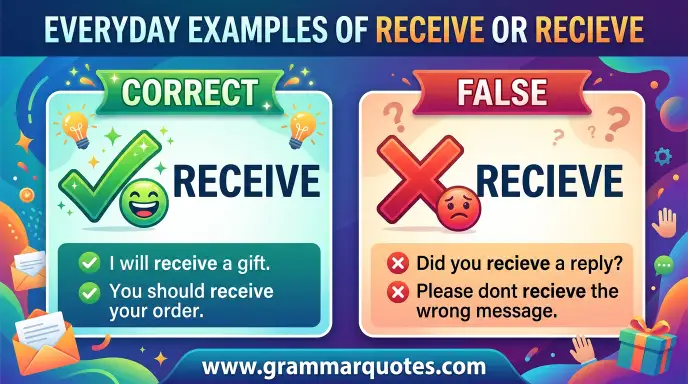
Have you ever typed “recieve” and wondered if it looks right? You are not alone. Receive is the correct spelling, while recieve is a common spelling mistake. The confusion usually happens because English vowel patterns are not always easy to predict.
The word receive means to get, accept, or be given something. You can receive an email, receive a gift, receive a message, or receive an award. Major dictionaries list receive as the standard English spelling.
The good news is that this mistake is easy to fix once you learn one simple spelling rule. In this guide, you will learn the difference between receive and recieve, what the word means, how to remember the correct spelling, how it is used in British and American English, and which mistakes to avoid.
Receive or Recieve: Quick Answer
Receive is the correct spelling. Recieve is incorrect.
The correct order of the letters is:
R E C E I V E
A useful memory rule is:
“I before E, except after C.”
So, after C, we write EI in receive.
Examples:
- I will receive the package tomorrow.
- Did you receive my email?
- She will receive an award for her work.
What Does Receive Mean?
Receive is a verb that generally means to get, accept, or be given something.
For example, if someone sends you a letter and it arrives, you receive the letter. If a company gives you an award, you receive an award.
Cambridge Dictionary defines receive as getting or being given something. It also lists other uses, including receiving signals and formally welcoming people.
Common uses of receive
Receive something from someone
I received a message from my teacher.
Receive an award
She received an award for her excellent work.
Receive information
We received new information about the project.
Receive an email
Did you receive my email?
Receive guests
The host received the guests warmly.
The word can also describe how something is accepted or viewed.
The new proposal was well received.
This means that people reacted positively to the proposal.
The Origin of Receive
The spelling of receive can seem unusual because its letters do not always match the way learners expect English words to behave.
The important point for modern writers is that receive has an established spelling with cei, not cie.
This is why recieve is not an alternative spelling. It is simply a misspelling.
English contains many words whose spelling must be learned through common patterns rather than pronunciation alone. This is one reason learners often confuse receive with words such as believe, piece, and ceiling.
A useful spelling pattern is:
I before E, except after C
Examples include:
- receive
- deceive
- conceive
- perceive
The rule is not perfect for every English word, but it is a useful memory aid for receive and related words.
British English vs American English
There is no British American spelling difference between receive and receive. Both British and American English use receive.
| British English | American English | Example |
| receive | receive | I will receive the package. |
| received | received | She received my message. |
| receiving | receiving | We are receiving applications. |
| recipient | recipient | The recipient received the email. |
Cambridge lists the same spelling and pronunciation for receive in its UK and US dictionary entries.
British and American English do have many spelling differences in other words, such as colour/color, centre/center, and theatre/theater. However, receive is not one of those differences.
What about Canada and Australia?
Canadian and Australian English also use receive.
So, whether you are writing for:
- the United States
- the United Kingdom
- Canada
- Australia
- international readers
the correct spelling is receive.
Which Version Should You Use?
There is only one standard spelling to choose between these two options:
Use receive.
United States
Use receive in school assignments, emails, websites, reports, and professional documents.
United Kingdom
Use receive as well. British English does not change this spelling.
Canada
Use receive in Canadian English.
Australia
Use receive in Australian English.
International writing
Receive is the safest choice for international English because it is the standard spelling.
Academic writing
Always use receive in essays, research papers, applications, and other formal writing.
Business writing
Use receive in emails, reports, invoices, customer messages, and professional documents.
Common Mistakes
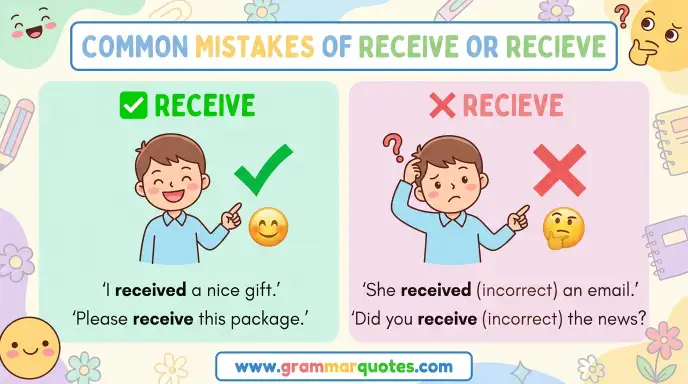
The most common mistake is switching the e and i.
Incorrect
I will recieve your email soon.
Correct
I will receive your email soon.
Why is “recieve” wrong?
The letters after c should appear as ei:
rece + ive
Not:
rec + ie + ve
Memory tip
Remember:
C comes before EI in receive.
You can also connect it with similar words:
- receive
- deceive
- conceive
- perceive
All contain cei.
Another common mistake
Do not assume that pronunciation tells you the complete spelling.
Receive is pronounced approximately /rɪˈsiːv/ in both British and American English.
The pronunciation can help you identify the word, but you still need to remember the correct letter order.
Everyday Examples
Emails
Did you receive my email?
I received your message this morning.
Business writing
We have received your application.
You will receive a confirmation email shortly.
News headlines
Local Students Receive National Awards
Company Receives New Funding
Blogs
You may receive an email after submitting the form.
Readers will receive a notification when the article is updated.
Social media
Did you receive my message?
I finally received my new phone!
Academic writing
Students who receive additional support often have more opportunities to practice.
The researchers received permission to conduct the study.
Daily conversation
Did you receive the package?
I received your invitation.
When did you receive it?
Google Trends & Modern Usage
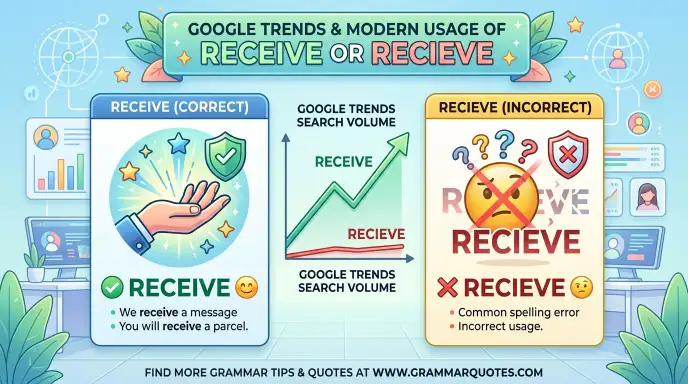
People often search “receive or recieve” because the two spellings look similar and the incorrect version is easy to type.
There is no need to invent exact search volume numbers to explain this pattern. The spelling confusion is understandable because English has many words with unusual vowel combinations.
Modern dictionaries consistently recognize receive as the standard spelling. Cambridge also provides examples such as receiving emails, letters, awards, and other things people get or are given.
The question is especially useful for:
- ESL learners
- students
- bloggers
- writers
- editors
- people writing professional emails
- anyone using English as a second language
The key search intent is simple: people want to know whether receive or recieve is correct.
The answer remains the same:
Receive is correct. Recieve is incorrect.
Quick Comparison Table
| Version | Meaning | Correct? | Region | Example |
| receive | Get or be given something | Yes | All major English varieties | I will receive the package. |
| recieve | Intended to mean “receive” | No | None | ❌ I will recieve the package. |
Receive vs Recieve at a Glance
| Question | Answer |
| Correct spelling | Receive |
| Incorrect spelling | Recieve |
| Part of speech | Verb |
| Basic meaning | To get or be given something |
| British spelling | Receive |
| American spelling | Receive |
| Memory rule | “I before E, except after C” |
| Common mistake | Switching ei to ie |
Key Takeaways
- Receive is the correct spelling.
- Recieve is a spelling mistake.
- The correct letter order is cei.
- Receive means to get, accept, or be given something.
- British and American English both use receive.
- Use receive in academic, business, and everyday writing.
- A useful memory aid is “I before E, except after C.”
- Words such as deceive, conceive, and perceive can help reinforce the spelling pattern.
FAQs
Is “receive” or “recieve” correct?
Receive is correct, while recieve is incorrect. The correct spelling contains cei: R E C E I V E. The word usually means to get or be given something, such as an email, letter, gift, award, or message.
Why do people spell receive as “recieve”?
People often spell receive as “recieve” because the vowel order is easy to mix up. English spelling does not always follow pronunciation in an obvious way. The common memory rule “I before E, except after C” can help you remember that receive uses ei after c.
What is the meaning of receive?
Receive means to get or be given something. For example, if someone sends you an email and you get it, you receive the email. The word can also be used for receiving awards, information, payments, signals, visitors, and other things.
Is “recieve” a real word?
No. Recieve is not the standard spelling of the English verb. If you mean “to get or be given something,” the correct word is receive. Always use receive in school, professional, academic, and online writing.
Is receive spelled differently in British English?
No. British English uses receive, just like American English. Some British and American spellings are different, such as colour/color and centre/center, but receive is spelled the same in both varieties.
How can I remember the spelling of receive?
A simple memory trick is “I before E, except after C.” In receive, the C comes before EI. You can also remember related words such as deceive, conceive, and perceive, which use the same cei pattern.
What is the past tense of receive?
The past tense and past participle of receive are received. For example: “I received your email yesterday.” The spelling changes by adding d because the base word already ends in e.
What is the difference between receive and get?
Both words can mean obtaining or being given something, but receive is often more formal. For example, “I got your email” sounds conversational, while “I received your email” sounds more formal and is common in business or academic writing.
Is “receiving” spelled with an e?
Yes. The correct spelling is receiving. When forming the ing form of receive, the final silent e is removed: receive → receiving. The spelling is not “recieving.”
What is the easiest way to avoid the receive spelling mistake?
Remember the middle of the word: RECEI. Think C + EI, not C + IE. If you are unsure while writing, checking a reliable dictionary is also a good habit.
Conclusion
The answer to “receive or recieve” is simple: receive is correct, and recieve is incorrect.
The word receive means to get, accept, or be given something. It is used in everyday conversation, emails, academic writing, business documents, and many other types of English. Major dictionaries recognize receive as the standard spelling.
There is also no British versus American spelling issue here. Both varieties use receive. The main challenge is remembering the order of the vowels after c.
If you often confuse the two spellings, remember “I before E, except after C.” You can also connect receive with deceive, conceive, and perceive.
So, whenever you are deciding between the two, choose:
Receive ✅
Recieve ❌
Memorable takeaway: When C comes first, remember EI in receive.
If this guide helped you, keep the spelling rule in mind the next time you write an email, assignment, or article.
Discover More Articles!
Portland OR ZIP Code: ZIP Codes, Areas, and Address Information
Tower or Terror: Definitions, Examples, and Common Mistakes
Beijing or Shanghai: Which City Should You Choose?(2026)

Ethan Parker is an English-language writer known for his interest in words, language, and clear communication. His work focuses on making everyday English easier to understand through simple explanations and practical examples.