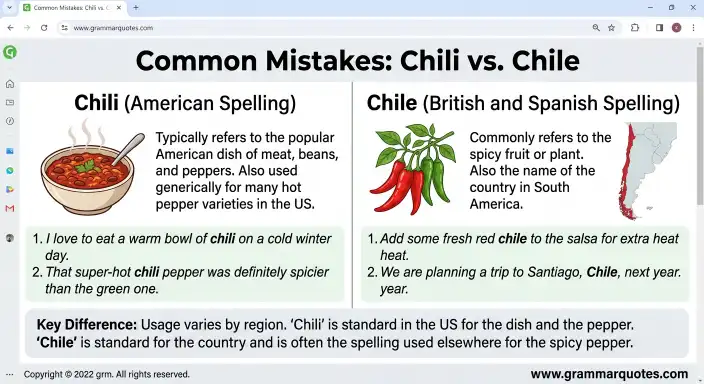
Both chili and chile are correct spellings, but their use depends on the type of pepper, the dish, and regional preferences. Chili is common in American English, especially when referring to the spicy stew made with meat, beans, and seasonings. Chile is widely used for the pepper itself in Mexican, Southwestern American, and Spanish influenced contexts.
For example, an American restaurant might advertise “homemade chili,” while a Mexican recipe might call for “fresh green chiles.” Both spellings can refer to hot peppers, so the context matters. The word chilli, with two Ls, is also common in British English and many other varieties of English.
These similar spellings often confuse students, food writers, and English learners. In this guide, you will learn the difference between chili and chile, discover when to use each word, and explore practical examples for cooking, academic writing, blogs, and everyday conversation.
Chili or Chile: Quick Answer
The difference between chili and chile depends on context and regional spelling preferences.
- Chili: Common in American English, especially for the spicy stew and also for hot peppers.
- Chile: Commonly used for hot peppers, particularly in Mexican and Southwestern American food writing.
- Chilli: A common British English spelling for the hot pepper.
Examples:
- I made a pot of beef chili for dinner.
- Add two fresh green chiles to the sauce.
- She chopped a red chilli for the curry.
Quick rule: Use chili for the American stew, chile for peppers when following Mexican or Southwestern culinary conventions, and chilli when following a British English style guide.
What Do Chili and Chile Mean?
Chili and chile are nouns associated with hot peppers and spicy food. Their meanings overlap, but their spelling and use vary by region and context.
1. What Does Chili Mean?
In American English, chili often refers to a spicy dish made with ingredients such as meat, beans, tomatoes, and chili peppers. It can also refer to the hot peppers used to add heat to food.
Examples:
- We cooked chili for the family dinner.
- Add a little chili to make the sauce hotter.
- The recipe calls for chili powder.
The exact meaning depends on the sentence. In a recipe for stew, chili usually refers to the dish. In a list of ingredients, it may refer to the pepper or a pepper based seasoning.
2. What Does Chile Mean?
Chile often refers to a hot pepper, especially in Mexican and Southwestern American cooking. It appears in the names of many traditional ingredients and dishes.
Examples:
- The recipe calls for fresh green chiles.
- She bought dried red chiles at the market.
- The restaurant serves roasted chile salsa.
The word is especially common in culinary writing that follows Spanish influenced naming traditions.
3. What Does Chilli Mean?
Chilli is a common spelling in British English and many other varieties of English. It usually refers to the hot pepper.
Examples:
- Add one red chilli to the curry.
- The soup contains fresh green chillies.
- He enjoys chilli sauce with his meal.
All three spellings are recognizable, but you should follow the spelling convention appropriate for your readers.
The Origin of Chili and Chile
The words chili and chile are connected to the Nahuatl word chīlli, which referred to a hot pepper. Nahuatl is an Indigenous language of Mexico.
The word entered Spanish as chile and later spread into English through contact with Spanish speaking communities and the wider history of food and trade.
Over time, English developed several spelling forms, including chili and chilli. Different countries and food traditions adopted their preferred spellings.
Why Are There Different Spellings?
English has borrowed many food words from other languages. When these words become part of everyday English, spelling can change across regions.
For example:
- Spanish and Mexican culinary usage often favors chile.
- American English commonly uses chili.
- British English commonly uses chilli.
The spellings can overlap, particularly when writers discuss peppers rather than a specific dish.
Is Chile Related to the Country Chile?
Yes, the spelling is identical, but the meaning depends on context.
- Chile: The country in South America.
- A chile: A hot pepper.
- Chili: Often the American stew or a hot pepper, depending on context.
Examples:
- She traveled to Chile last summer.
- The recipe includes a roasted chile.
- We ate chili on a cold evening.
Capitalization and sentence context help readers understand the intended meaning.
British English vs American English
The preferred spelling often changes by region, although chile remains common in particular culinary traditions.
| British English | American English | Example |
| Chilli | Chili | Add a chopped chilli/chili to the soup. |
| Chilli peppers | Chili peppers | The market sells fresh chilli/chili peppers. |
| Chilli sauce | Chili sauce | She served chilli/chili sauce with dinner. |
| Chile | Chile | The recipe uses roasted chile peppers. |
| Chili | Chili | We made a pot of chili for dinner. |
The table shows common patterns rather than strict rules for every context. American recipes may use chile when following Mexican or Southwestern culinary traditions.
Is Chili British or American?
Chili is especially common in American English. It often names the thick, spicy stew made with ingredients such as meat, beans, tomatoes, and seasonings.
Example: We served homemade chili with cornbread.
Is Chile British or American?
Chile is particularly common in American culinary writing influenced by Mexican and Southwestern food traditions. It usually refers to the pepper.
Example: The sauce is made with roasted green chiles.
Does British English Use Chile?
British English commonly uses chilli for the pepper. However, chile may appear in recipes that preserve Spanish or Mexican ingredient names.
Example: The chef added fresh red chillies to the curry.
Do Chili and Chile Sound Different?
In most English speaking contexts, chili and chile are pronounced the same or very similarly. The spelling alone does not usually indicate a difference in heat, flavor, or pepper variety.
Which Version Should You Use?
Choose the spelling that fits your audience and the meaning you intend.
United States
Use chili for the American stew. For peppers, chili is also widely accepted, while chile is common in Mexican and Southwestern culinary contexts.
Examples:
- We ordered a bowl of chili.
- The salsa contains roasted green chiles.
United Kingdom
Use chilli for the pepper in standard British English.
Example: Add one red chilli to the sauce.
If you are writing about an American dish, retain its established name, such as chili con carne.
Canada
Canadian English uses both chili and chilli, depending on the publication and context. Follow your dictionary, recipe source, or organization’s style guide.
Example: The recipe includes chili powder.
Australia
Australian English commonly uses chilli for the pepper.
Example: The salad dressing contains fresh chilli.
International Writing
For international readers, choose one spelling and explain the ingredient if confusion is possible.
For example, “Add one fresh chile pepper” makes it clear that the recipe calls for a pepper rather than a stew.
Academic Writing
Use the spelling specified by your institution or the dictionary you follow. In a paper about Mexican cuisine, chile may be appropriate when discussing traditional ingredient names.
Business and Food Writing
Restaurants, food brands, and recipe websites should use consistent spelling across menus, product descriptions, and recipes.
If you sell an American style stew, chili is a natural choice. If your content focuses on Mexican ingredients, chile may better match the culinary context.
Common Mistakes With Chile And Chili

Writers sometimes treat chili, chile, and chilli as if only one spelling can ever be correct. In reality, the best choice depends on meaning and regional convention.
| Confusing Usage | Clearer Usage | Explanation |
| We ate a bowl of chile. | We ate a bowl of chili. | Chili is the common American spelling for the stew. |
| Add two fresh chilies to this British recipe. | Add two fresh chillies to this British recipe. | Chillies follows common British spelling. |
| The country is famous for its spicy food in chili. | The country is famous for its spicy food in Chile. | Capitalize Chile when referring to the country. |
| Add a chile stew to the pot. | Add chili to the pot. | Use chili if you mean the American stew. |
Some examples may be acceptable in certain regional or culinary contexts. The goal is to choose wording that fits your intended meaning.
Mistake 1: Confusing the Pepper With the Stew
Incorrect for the intended meaning: I ordered a bowl of chile.
Clearer: I ordered a bowl of chili.
If you mean the American stew, chili is the more familiar spelling.
Mistake 2: Ignoring Regional Spelling
A British recipe may use chilli, while an American recipe may use chili.
Tip: Follow the spelling style of the recipe or publication.
Mistake 3: Confusing the Pepper With the Country
Incorrect: The recipe uses fresh Chile peppers.
Better: The recipe uses fresh chile peppers.
When referring to a pepper, chile is usually lowercase unless it begins a sentence or appears in a proper name. The country name Chile is capitalized.
Memory Tip
Remember these simple associations:
- Chili: Think of an American bowl of chili.
- Chile: Think of a hot pepper in Mexican or Southwestern cooking.
- Chilli: Think of the common British spelling for the pepper.
These are useful guidelines, not absolute rules for every recipe.
Everyday Examples of Chili and Chile

1. Emails
- Please prepare the chili recipe for Friday’s event.
- Could you buy fresh green chiles for the salsa?
- The menu includes a spicy chilli sauce.
2. Business Writing
- Our restaurant serves homemade beef chili.
- The product contains dried red chile peppers.
- The company launched a new chilli sauce.
3. News Headlines
- Local Restaurant Wins Award for Its Famous Chili
- Chefs Celebrate the Flavor of Fresh Green Chiles
- New Study Examines the Compounds That Give Chilli Peppers Their Heat
4. Blogs
- How to Make a Simple Bowl of American Chili
- Five Ways to Cook With Fresh Chile Peppers
- How to Store Red Chillies for Longer
5. Social Media
- Homemade chili is perfect for a cold evening.
- Fresh green chiles add flavor to this salsa.
- A little chilli makes this curry extra spicy.
6. Academic Writing
- The article examines the role of chile peppers in Mexican cuisine.
- The study discusses the ingredients commonly used in American chili.
- Researchers examined compounds responsible for the heat of chilli peppers.
7. Daily Conversation
- Would you like chili with your dinner?
- Can you pass me the fresh chiles?
- This curry needs a little more chilli.
Google Trends and Modern Usage
People search for “chili or chile” because the spellings overlap and can refer to different things. Recipe websites, restaurant menus, cooking videos, and food blogs use these forms in different ways.
Which Spelling Is More Popular?
The answer depends on location and context. Chili is strongly associated with the American stew, while chile often appears in Mexican and Southwestern American food writing. Chilli is common in British English and several other varieties.
Without checking a specific Google Trends report, it would be inaccurate to give exact search volumes or claim that one spelling is more popular worldwide.
Why Do People Search for This Keyword?
Common reasons include:
- Checking the spelling of hot peppers.
- Writing or editing recipes.
- Learning American and British English differences.
- Understanding Mexican food terminology.
- Distinguishing the pepper from the American stew or the country Chile.
Which Spelling Is Best for Modern Writing?
Use chili for the American stew, chile when following Mexican or Southwestern pepper terminology, and chilli when following British spelling conventions.
If a restaurant or recipe uses an established name, keeping that name is often the clearest choice.
Chili vs Chile: Quick Comparison Table
| Version | Meaning | Correct? | Common Usage | Example |
| Chili | American stew or hot pepper | Yes | American English | We made chili for dinner. |
| Chile | Hot pepper | Yes | Mexican and Southwestern culinary contexts | Add two green chiles. |
| Chilli | Hot pepper | Yes | British English and other varieties | Chop one red chilli. |
| Chile | Country in South America | Yes | Geography and travel | She visited Chile. |
Key Takeaways
- Chili, chile, and chilli are all accepted spellings in appropriate contexts.
- Chili is common in American English and is the usual spelling for the American stew.
- Chile often refers to hot peppers in Mexican and Southwestern American cooking.
- Chilli is common in British English.
- The word Chile is also the name of a country and must be capitalized in that meaning.
- The spelling does not tell you how hot a pepper is.
- Follow your audience’s spelling conventions and remain consistent.
People Also Ask
1. Is it chili or chile?
Both are correct, but they are often used differently. Chili is common in American English, especially for the spicy stew. Chile often refers to the pepper, particularly in Mexican and Southwestern American cooking. Context and regional preferences determine the best choice.
2. Is chile the same as chili pepper?
Yes, chile can refer to a chili pepper. The spelling chile is common in Mexican and Southwestern American culinary contexts. Chili pepper is another widely used term, especially in American English. Both terms refer to the spicy fruit of plants in the genus Capsicum.
3. Is chili American or British English?
Chili is particularly common in American English, especially for the stew. British English generally uses chilli when referring to the pepper. However, regional food traditions and established dish names can affect which spelling appears in a recipe.
4. Why do Americans spell it chili and British people spell it chilli?
English spelling differs across regions, and food words can develop different accepted forms over time. American English commonly uses chili, while British English commonly uses chilli for the pepper. Both spellings are understood, but each is associated with different regional conventions.
5. Is Chile a pepper or a country?
It can mean either one. Chile is the name of a country in South America, and it can also refer to a hot pepper in culinary writing. Capitalization and context help distinguish the two meanings. For example, “She visited Chile” refers to the country, while “Add a chile” refers to a pepper.
FAQs
1. Which spelling should I use in a recipe?
Use the spelling that matches your recipe’s audience and culinary tradition. Chili is common in American recipes, chile often appears in Mexican and Southwestern American recipes, and chilli is common in British recipes. If you are adapting a published recipe, keeping its original spelling can help preserve consistency.
2. Is chili spelled with one L or two?
Both spellings exist. Chili has one L and is common in American English. Chilli has two Ls and is common in British English. The spelling chile is also widely used for hot peppers, especially in Mexican and Southwestern American cooking.
3. Are chili and chile pronounced the same?
In many English speaking regions, chili and chile have the same or a very similar pronunciation. The spelling does not necessarily indicate a difference in the pepper itself. Local accents and the language of origin can affect pronunciation.
4. Does chile mean spicy?
Not exactly. Chile refers to a type of hot pepper, but the level of heat depends on the variety. Some peppers are mild, while others are very hot. The spelling alone does not indicate how spicy a pepper will be.
5. Is chilli sauce correct?
Yes. Chilli sauce is a common spelling in British English and some other varieties. In American English, chili sauce is also common. Both forms can be correct, so choose the spelling that matches your audience or the product’s established name.
Conclusion
Choosing between chili and chile depends on what you mean and who will read your writing. Both spellings can refer to hot peppers, but chili is especially common in American English and is the usual spelling for the American stew. Chile is often used for peppers in Mexican and Southwestern American culinary traditions, while chilli is common in British English.
The most important point is to consider the context. If you are writing a recipe for an American stew, chili is a natural choice. If you are describing fresh peppers used in Mexican cooking, chile may fit better. For a British recipe, chilli is often the preferred spelling.
Also remember that Chile, with a capital C, is the name of a country in South America. The surrounding sentence usually makes the intended meaning clear.
Final takeaway: Choose chili for the American dish, chile for peppers when appropriate, and chilli for British style spelling. Consistent spelling makes your writing clearer and easier to understand.
Discover More Articles!
Palate or Palette: Meaning, Difference, and Examples
Minimize or Minimise: Which Spelling Is Correct and Examples
Vietnam or Thailand: Which Country Is Best for Your Travel Plans?

Ethan Parker is an English-language writer known for his interest in words, language, and clear communication. His work focuses on making everyday English easier to understand through simple explanations and practical examples.