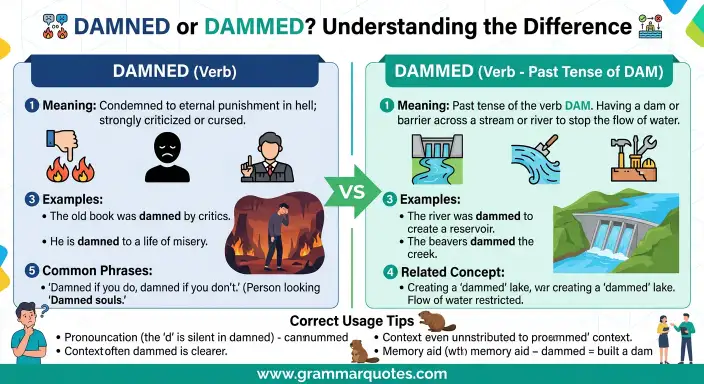
Have you ever wondered if to write damned or dammed? Both words are correct, but they have different meanings. Damned usually expresses blame, anger, or condemnation, while dammed means blocked or held back by a dam. Choosing the right word depends on the message you want to share.
For example, you might say, “The damned noise kept me awake,” to express annoyance. However, “The river was dammed to create a reservoir” describes a way to control water.
These words look and sound almost the same, which makes them easy to confuse. Yet, using the wrong spelling can change the meaning of your sentence.
In this guide, you will learn the difference between damned and dammed, their definitions, common uses, and spelling rules. You will also find simple examples, a comparison table, and answers to common questions. By the end, you will know which word to use in everyday writing, schoolwork, and professional communication.
Damned and Dammed: Quick Answer
Damned and dammed are both correct English words, but they serve different purposes.
- Damned: Used to express anger, blame, or condemnation. It can also mean condemned to punishment.
- Dammed: The past tense and past participle of dam. It means to block or control the flow of water by building a barrier.
Examples of Damned
- That damned computer keeps freezing.
- The story describes a damned soul.
- He was damned for his cruel actions.
Examples of Dammed
- The river was dammed to provide water for nearby farms.
- Engineers dammed the stream to create a reservoir.
- The water was dammed behind a strong barrier.
Easy rule: Use damned when expressing anger or condemnation. Use dammed when talking about blocking water or a similar flow.
Definition and Meaning
What Does Damned Mean?
Damned is the past participle of the verb damn. It can mean condemned, blamed, or regarded as deserving punishment. In informal English, it is also used to express frustration or to add emphasis.
For example:
- The judge damned his dishonest behavior.
- This damned phone will not charge.
- The character believed he was damned forever.
The word can sound rude or offensive, especially when used as an insult. In formal writing, consider using words such as condemned, blamed, or terrible, depending on the intended meaning.
What Does Dammed Mean?
Dammed is the past tense and past participle of the verb dam. It means to block, restrict, or control the flow of water by building a dam.
For example:
- The river was dammed many years ago.
- Workers dammed the stream during construction.
- The valley flooded after the river was dammed.
The word can also be used figuratively to describe something being held back or blocked.
For example:
- His dammed up emotions finally came out.
In this expression, dammed up means that feelings have been held back rather than openly expressed.
The Origin of Damned and Dammed
The word damned comes from damn, which entered English through Old French damner and Latin damnare. These words were associated with condemning or declaring someone guilty.
Over time, damned developed both religious and everyday meanings. Today, it may describe condemnation, strong disapproval, or frustration.
The word dammed comes from the verb dam, which refers to blocking water with a barrier. The noun dam has older roots in Germanic languages.
As people built barriers to control rivers and streams, the verb became closely linked to water management, irrigation, and reservoirs.
Although damned and dammed sound alike, their origins and meanings are different.
British English vs. American English
There is no major spelling difference between British and American English for these two words. Both varieties use damned for condemnation or emphasis and dammed for blocking water.
| Meaning | British English | American English |
| Expressing anger | Damned | Damned |
| Condemned or blamed | Damned | Damned |
| Blocking a river | Dammed | Dammed |
| Past tense of dam | Dammed | Dammed |
Which Spelling Is More Common?
Both spellings are standard in British and American English. The correct choice depends on the meaning, not the country or writing style.
For example:
- British English: The river was dammed to supply water.
- American English: The river was dammed to supply water.
Both sentences are correct.
When to Use Damned
Use damned when you want to express anger, blame, condemnation, or strong emphasis.
1. To Express Annoyance
People often use damned informally when something causes frustration.
Examples:
- This damned printer is not working.
- I cannot find the damned keys.
- That damned alarm woke everyone up.
This usage is informal and may sound impolite in some situations.
2. To Describe Condemnation
The word can describe someone or something viewed as condemned or deserving punishment.
Examples:
- The villain was damned for his actions.
- The tale tells of a damned soul.
- They believed the dishonest king was damned.
3. To Add Emphasis
In informal speech, damned can strengthen an adjective or statement.
Examples:
- It was a damned good performance.
- She is a damned clever student.
- That was a damned difficult question.
Use this form carefully in professional or academic writing because it can sound strong or offensive.
When to Use Dammed
Use dammed when referring to a dam or the act of blocking a flow.
1. To Describe a River or Stream
Examples:
- The river was dammed to prevent flooding.
- They dammed the stream near the village.
- The water was dammed before it reached the fields.
2. To Explain Water Storage
Dams can help store water for drinking, farming, and other uses.
Examples:
- The river was dammed to create a reservoir.
- Engineers dammed the waterway for irrigation.
- The stream was dammed to supply water during dry months.
3. To Describe Something Held Back
The word can also appear in figurative expressions, especially dammed up.
Examples:
- Years of dammed up anger affected their relationship.
- The speech released his dammed up emotions.
- Her dammed up frustration became clear during the meeting.
In these examples, the word suggests that feelings or reactions were held back like water behind a barrier.
Common Mistakes with Damned and Dammed
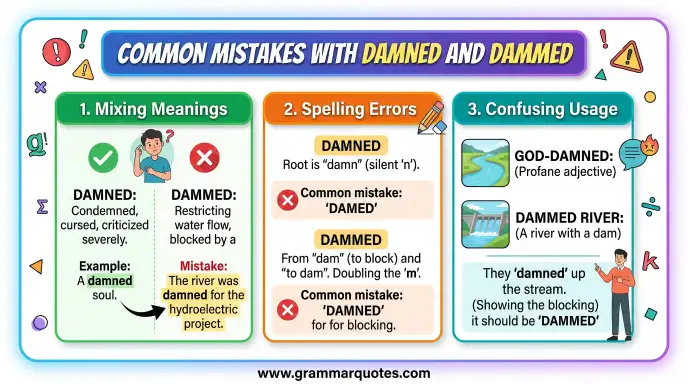
Mistake 1: Using Damned for a River
Incorrect: The river was damned to create a reservoir.
Correct: The river was dammed to create a reservoir.
Why? Dammed is the correct form of the verb dam when describing the construction of a barrier.
Mistake 2: Using Dammed to Express Anger
Incorrect: This dammed computer keeps freezing.
Correct: This damned computer keeps freezing.
Why? Damned is the usual word when expressing annoyance.
Mistake 3: Thinking Both Words Have the Same Meaning
Although they sound alike, the words are not interchangeable.
- The damned man was blamed for his actions.
- The river was dammed to control its flow.
The first sentence refers to condemnation. The second refers to controlling water.
Mistake 4: Forgetting the Double M in Dammed
The base word dam ends in one consonant. When adding ed, the final consonant is doubled.
Dam + ed = dammed.
By contrast, damned comes from damn:
Damn + ed = damned.
Remembering their base words makes the spelling easier.
Everyday Examples of Dammed and Damned
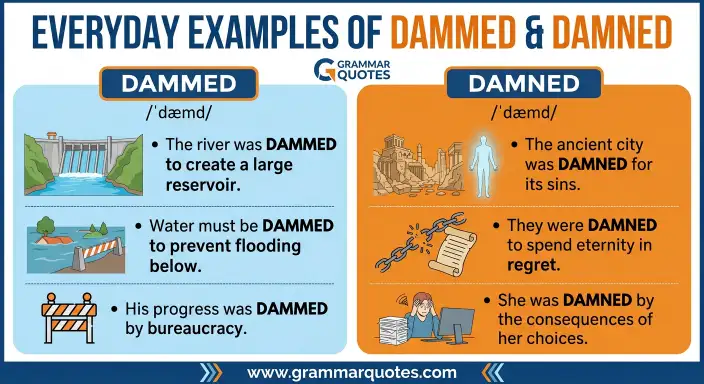
In Daily Conversation
- “Where are my damned glasses?” expresses frustration.
- “The river was dammed years ago” describes a change to a waterway.
- “That was a damned good meal” adds emphasis.
In School and Academic Writing
- The report explains how the river was dammed.
- The novel describes a character who believes he is damned.
- The science project explores how a dam affects water flow.
For Work and Professional Writing
- The construction team dammed the stream during the project.
- The writer removed the word damned to keep the report formal.
- The engineers studied the effects of a dammed river on nearby land.
Literature and Creative Writing
- The hero feared that he was damned because of his past.
- The villagers dammed the river to protect their crops.
- The character shouted about the damned situation.
These examples show that context is the best way to identify the correct word.
Damned vs. Dammed: Side by Side Comparison
| Feature | Damned | Dammed |
| Base word | Damn | Dam |
| Part of speech | Past participle; also an adjective | Past tense and past participle |
| Main meaning | Condemned, blamed, or used for emphasis | Blocked or controlled with a dam |
| Common context | Anger, criticism, literature | Rivers, streams, water storage |
| Example | This damned laptop is slow. | The river was dammed. |
| Spelling tip | Contains amn | Contains double mm |
What Is the Main Difference?
The main difference is the base word and its meaning. Damned comes from damn, while dammed comes from dam.
If the sentence expresses frustration or condemnation, damned is usually correct. If it describes blocking water, choose dammed.
Easy Tricks to Remember the Difference
Trick 1: Think of the Base Word
- Damned → damn → blame or condemn.
- Dammed → dam → block water.
This is the simplest way to remember the correct spelling.
Trick 2: Look for Water
If your sentence talks about a river, stream, reservoir, or water control, dammed is likely the right choice.
Example: The river was dammed to store water.
Trick 3: Look for Strong Feelings
If the sentence expresses anger, annoyance, or condemnation, damned is usually the correct choice.
Example: That damned noise is keeping me awake.
Trick 4: Check the Double Letter
Dammed has two m letters because the final consonant in dam is doubled before adding ed. Damned keeps the spelling of damn.
Frequently Asked Questions
1. Is Damned or Dammed Correct?
Both are correct English words. Damned relates to condemnation or emphasis, while dammed means blocked or controlled by a dam.
2. What Does Damned Mean?
Damned can mean condemned, blamed, or regarded as deserving punishment. It is also used informally to express anger or emphasis.
3. What Does Dammed Mean?
Dammed is the past tense and past participle of dam. It means that a river, stream, or other flow was blocked or controlled by a dam.
4. Is Damned a Bad Word?
It can be considered a swear word or mildly offensive expression, depending on the context. It is best to avoid it in formal or sensitive situations.
5. Why Does Dammed Have Two M’s?
The final consonant in dam is doubled before adding ed. Therefore, the correct spelling is dammed, not damed.
6. Can Dammed Be Used for Emotions?
Yes. In expressions such as dammed up anger, it describes feelings that have been held back or suppressed.
7. Are Damned and Dammed Pronounced the Same?
Yes. In common English pronunciation, they are homophones, meaning they sound the same but have different spellings and meanings.
8. Which Word Is Used for a River?
Use dammed when describing a river that has been blocked or controlled by a dam.
Example: The river was dammed to create a reservoir.
9. Is Damned the Past Tense of Damn?
Yes. Damned is the simple past and past participle form of the verb damn.
Example: The critic damned the decision.
10. How Can I Remember Damned vs. Dammed?
Connect damned with damn, meaning condemn or express annoyance. Connect dammed with dam, a barrier used to control water.
Conclusion
The difference between damned and dammed becomes easy once you understand their base words. Both spellings are correct, but they cannot always replace each other.
Use damned when expressing condemnation, blame, frustration, or emphasis. For example, “That damned machine is broken” shows annoyance. You may also see the word in books and stories about characters who are considered condemned.
Use dammed when describing something blocked or controlled by a dam. For example, “The river was dammed to create a reservoir” explains how water was held back.
Remember this simple rule: damned comes from damn, while dammed comes from dam. Check the meaning of your sentence before choosing a spelling. With a little practice, you will be able to use both words correctly in everyday conversation, school assignments, and professional writing.
Discover More Articles!
Bollard or Ballard: Which Spelling Is Correct?(2026)
Boat or Ship: What’s the Difference?(2026)
YAML vs YML: What’s the Difference?(2026)

Ethan Parker is an English-language writer known for his interest in words, language, and clear communication. His work focuses on making everyday English easier to understand through simple explanations and practical examples.