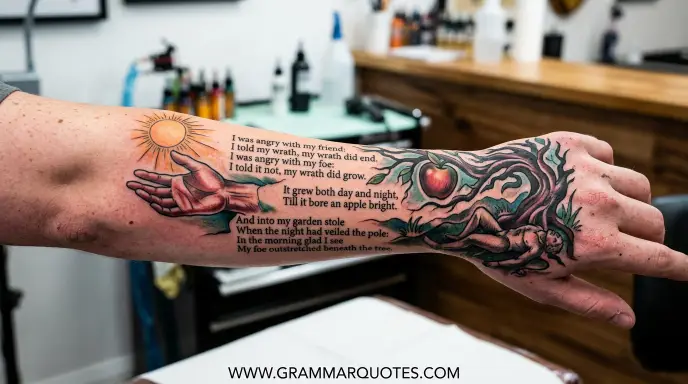
A poison tree tattoo often symbolizes hidden anger, emotional pain, resentment, growth, and the consequences of keeping negative feelings inside. Its meaning can change depending on the design, words, colors, and personal story behind it.
The image is also strongly connected with “A Poison Tree,” a famous poem by English poet William Blake.
In the poem, anger that is not openly addressed continues to grow and eventually produces a poisonous fruit. Because of this connection, the tree has become a powerful symbol of emotions, secrecy, conflict, and personal consequences.
Some people choose this type of artwork because they like dark or mysterious nature imagery. Others use it to represent an experience, an emotional chapter, or the idea that hidden feelings can grow over time.
This guide explains the meaning, symbolism, poem connection, design ideas, common interpretations, and questions people often have about this tattoo concept.
Poison Tree Tattoo : Quick Answer
A poison tree tattoo commonly represents anger, resentment, hidden emotions, emotional growth, consequences, or a difficult experience.
The symbolism often comes from William Blake’s poem “A Poison Tree,” where suppressed anger grows into something harmful.
Common meanings include:
- Hidden anger
- Resentment
- Emotional pain
- Inner conflict
- Secrets
- Consequences
- Personal growth
- Healing after a difficult period
- The danger of holding emotions inside
- Transformation
The exact meaning depends on the person wearing the design.
Definition and Meaning
What does a poison tree symbolize?
A tree usually represents life, growth, strength, and time. Adding the idea of poison changes the symbolism.
Instead of representing only healthy growth, the image can suggest that something negative has been growing beneath the surface.
For some people, the concept means:
“What we keep inside can grow.”
For others, it can represent overcoming anger and leaving a painful experience behind.
What does the fruit represent?
The fruit can symbolize the result of something that has been growing over time.
In Blake’s poem, the poisonous fruit is connected to anger and its consequences. In tattoo art, fruit may therefore represent the final result of hidden emotions, choices, or conflict.
The Connection to William Blake’s “A Poison Tree”
The strongest literary connection comes from William Blake’s poem “A Poison Tree,” published in Songs of Experience in 1794.
The poem describes anger toward a friend and anger toward an enemy. The speaker’s untreated anger toward the enemy grows into a tree that eventually produces poisonous fruit.
This makes the tree a symbol of emotions that are allowed to grow without being addressed.
The poem is not simply about a literal poisonous plant. It uses the tree as a metaphor for the development and consequences of resentment.
Why is the poem important to the tattoo meaning?
Because of the poem, the image can represent an emotional process:
anger → hidden feelings → growth → consequences
A person may choose the artwork as a reminder to recognize difficult emotions rather than allowing them to control their life.
Main Symbolism
1. Hidden Anger
One of the most common interpretations is suppressed anger.
The roots can represent where the feeling began, while the branches show how it continued to grow.
2. Resentment
The design may represent resentment that remained unresolved for a long time.
The tree’s growth can visually show how a small feeling can become something much larger.
3. Emotional Pain
Dark trees can also symbolize difficult memories or emotional struggles without representing one specific event.
4. Consequences
The poisonous fruit can represent the consequences of choices, actions, or emotions.
5. Growth
Interestingly, the tree does not have to represent only negativity.
A person may use it to represent growth through a difficult experience. The tree can show that something painful became part of a larger journey.
6. Transformation
A dark tree can symbolize changing from one stage of life to another.
Dead branches, new leaves, flowers, or fruit can be used to show different stages of change.
Poison Tree Tattoo Design Ideas
There are many ways to interpret the concept visually.
Dark Tree
A simple black tree with twisted branches creates a mysterious and serious appearance.
This style focuses more on symbolism than decoration.
Tree With Poisonous Fruit
Adding fruit makes the connection to Blake’s poem easier to recognize.
The fruit may be shown as bright, dark, cracked, or surrounded by leaves.
Tree With Deep Roots
Large roots can symbolize the past and the origins of emotional experiences.
This design can work well when the idea is about something that developed over many years.
Dead Tree
A dead or leafless tree can represent loss, emotional exhaustion, or the end of a difficult chapter.
Tree With New Growth
New leaves or flowers growing from a dark tree can create a different message.
It may represent recovery, change, or finding something positive after a difficult period.
Tree and Snake
Some designs combine the tree with a snake. This can introduce additional symbolism related to temptation, danger, change, or mystery.
The meaning becomes more personal because the snake is not part of the basic poem itself.
Small vs Large Designs
Small design
A small version may use only:
- A simple tree
- A few branches
- One piece of fruit
- Minimal roots
This creates a subtle symbol without many visual details.
Larger design
A larger piece can include:
- Detailed roots
- Twisted branches
- Multiple fruits
- Birds
- Flowers
- Text
- Shadows
- Moon or clouds
More space allows the artist to create a stronger visual story.
Grey and Black vs Color
Black and grey
Black and grey artwork often creates a darker and more literary feeling.
It can emphasize the shape of the branches, roots, and fruit without relying on bright colors.
Color
Color can change the mood.
For example, a design may use different shades for:
- Leaves
- Fruit
- Flowers
- Sky
- Background
A bright fruit against a dark tree can create strong visual contrast.
Common Symbols Used With the Tree
People sometimes add other elements to give the design a more personal meaning.
Birds
Birds can represent freedom, movement, or leaving the past behind.
Roots
Roots often symbolize history, family, memories, or the beginning of an experience.
Flowers
Flowers can represent new growth, beauty, or change.
Falling Leaves
Falling leaves may suggest change, passing time, or letting go.
Moon
A moon can create a quiet, mysterious atmosphere and may emphasize the darker side of the design.
Broken Branches
Broken branches can symbolize loss, damage, or an experience that changed someone.
These interpretations are not fixed rules. Symbolism depends on the person and the overall design.
Common Mistakes About the Meaning
Mistake 1: It always means evil
Not necessarily.
A dark tree can look mysterious, but the symbolism is often more emotional or literary than simply “evil.”
Mistake 2: Every design refers directly to Blake
Not every tree tattoo is based on the poem.
Someone may use the concept simply because they like the symbolism of growth, danger, or transformation.
Mistake 3: The meaning is always negative
The image can also represent healing, learning, personal change, and moving beyond difficult experiences.
Mistake 4: The fruit has only one meaning
Fruit can represent consequences in the Blake inspired interpretation, but an individual may give it a completely different personal meaning.
Everyday and Personal Meanings
People may choose this imagery to represent different life experiences.
For example:
After a difficult relationship:
The tree could symbolize emotions that developed during the relationship and the decision to move forward.
After overcoming a difficult period:
The dark tree could represent the past, while new leaves represent growth.
As a reminder:
The design can remind someone not to allow anger or resentment to grow unchecked.
For literary interest:
Someone who enjoys William Blake may choose the image as a visual reference to his poem.
Is the Poison Tree Tattoo Always About Anger?
No.
Anger is one of the strongest associations because of Blake’s poem, but tattoo symbolism is personal.
The same tree can represent:
- Pain
- Growth
- Memory
- Change
- Resilience
- Consequences
- Mystery
- A personal chapter
The surrounding elements often provide clues about the intended meaning.
Where Is This Design Commonly Placed?
People may choose different locations based on the size and style of the artwork.
Common tattoo locations include:
- Forearm
- Upper arm
- Shoulder
- Back
- Chest
- Calf
- Thigh
A small design can work with limited space, while a detailed tree may need a larger area.
If someone is considering a tattoo, placement should also take into account personal preferences, clothing, school or workplace rules, and professional advice from a qualified tattoo artist.
Does a Poison Tree Tattoo Have a Spiritual Meaning?
It can, but there is no single universal spiritual meaning.
Some people may interpret a tree as a symbol of life, knowledge, connection, or transformation. The word “poison” can then introduce ideas of temptation, danger, or negative influence.
These meanings are personal rather than fixed religious rules.
British English vs American English
The phrase is understood in both British and American English.
The spelling of poison, tree, and tattoo does not change between the two varieties.
The literary connection to William Blake is also relevant to English language readers in both forms of English.
How to Choose a Meaning for Your Design
Before choosing a specific version, think about what you want the artwork to communicate.
Ask yourself:
- Do I want the design to represent anger?
- Do I want it to represent growth after a difficult period?
- Do I want a direct connection to Blake’s poem?
- Do I want the image to be mysterious rather than literary?
- Do I want roots, fruit, flowers, or other symbols?
The answers can help create a design that has a clear personal meaning.
Poison Tree Tattoo and Literature
The literary connection is one of the most interesting parts of this concept.
William Blake used the tree as a metaphor for anger that is allowed to grow. The imagery connects an internal emotion with something visible and physical.
That makes the idea especially suitable for people who enjoy tattoos with stories behind them.
Instead of being only decorative, the design can represent an idea from literature.
Google Trends & Search Intent
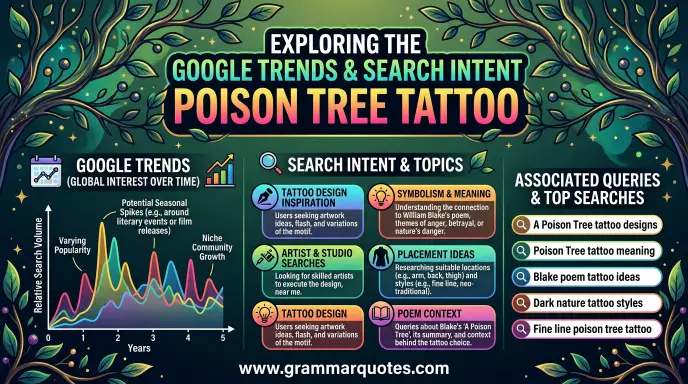
Search interest around this phrase can come from several different intentions.
Some people may want:
- Tattoo meanings
- Design inspiration
- William Blake’s poem
- Small tree tattoo ideas
- Dark tree symbolism
- Poisonous fruit symbolism
- Literary tattoo ideas
- Minimalist tree designs
Because the same phrase can have different meanings, an informative article should cover both the tattoo symbolism and the literary background.
This also makes related terms useful for without repeating the exact keyword too often.
People Also Ask
What does a poison tree tattoo mean?
It often represents hidden anger, resentment, emotional pain, consequences, growth, or transformation.
What does the poison tree symbolize?
It can symbolize emotions or experiences that grow over time, especially anger or resentment.
Is the design based on William Blake?
It can be. The strongest literary connection is Blake’s poem “A Poison Tree.”
What does the fruit represent?
In a Blake inspired design, the fruit can represent the consequence of anger that has been allowed to grow.
What does a tree tattoo symbolize?
Trees commonly represent growth, strength, life, roots, change, and connection.
Can this tattoo have a positive meaning?
Yes. It can represent learning, healing, transformation, or growth after a difficult experience.
What does a dead tree tattoo mean?
A dead tree may symbolize loss, change, the end of a chapter, or a difficult period.
What do tree roots represent in tattoo art?
Roots can symbolize history, family, memories, identity, or the foundation of a person’s life.
Is a poison tree tattoo only about anger?
No. The meaning can vary depending on the person’s story and the design elements.
What poem is connected with the poison tree?
The main literary connection is William Blake’s “A Poison Tree.”
FAQs
What is the main meaning of this tattoo?
The most common interpretation is hidden anger or resentment that grows over time. However, it can also represent transformation, emotional pain, consequences, or personal growth.
What does the fruit mean?
The fruit can symbolize the result or consequence of something that has developed over time. In Blake’s poem, it is closely connected with the growth of anger.
Can I make the design positive?
Yes. Adding flowers, fresh leaves, new branches, or other elements can shift the focus toward healing and growth.
Is the design connected to William Blake?
Often, yes. Blake’s poem “A Poison Tree” is the best known literary source associated with this imagery.
What does a black tree represent?
A black tree can create a dark or mysterious mood and may symbolize pain, memory, strength, change, or hidden emotions.
What does a tree with fruit symbolize?
It can represent growth and the results of something developing over time. The exact meaning depends on the fruit and the surrounding design.
Final Comparison of Meanings
| Design Element | Common Interpretation |
| Tree | Growth, life, strength |
| Roots | History, memories, identity |
| Dark branches | Pain, mystery, hidden emotions |
| Poisonous fruit | Consequences, resentment |
| Dead tree | Loss, change, ending |
| New leaves | Growth, healing, renewal |
| Flowers | Beauty, change, new beginnings |
| Broken branches | Loss or difficult experiences |
| Birds | Freedom or moving forward |
| Snake | Danger, change, mystery |
Conclusion
A poison tree tattoo can carry a deep meaning, especially when it is inspired by William Blake’s “A Poison Tree.” The image can represent anger, resentment, hidden emotions, consequences, or the way feelings grow when they remain unaddressed.
However, there is no single meaning that applies to everyone. A dark tree may represent pain for one person and personal growth for another. Roots can represent the past, fruit can represent consequences, and new leaves can symbolize change or healing.
The most meaningful design is usually the one that matches the story or idea the person wants to express. if it is simple and minimal or detailed with roots, fruit, flowers, and branches, the symbolism can be shaped by the elements included in the artwork.
Discover More Articles!
67 Meaning : Spelling, Facts, and How to Write It Correctly
Immigration or Emigration: What Is the Difference?
Tweeking or Tweaking: Which Spelling Is Correct?(2026)

Ethan Parker is an English-language writer known for his interest in words, language, and clear communication. His work focuses on making everyday English easier to understand through simple explanations and practical examples.