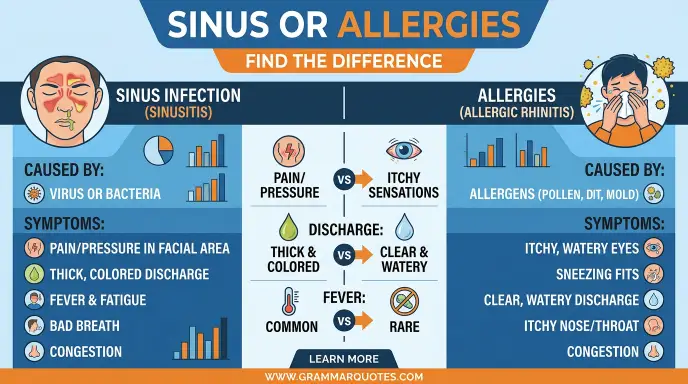
Sinus or allergies can cause similar problems, such as a blocked nose, runny nose, sneezing, and pressure around the face, but they are not the same condition.
Allergies happen when the immune system reacts to substances such as pollen, dust mites, mold, or pet dander. Sinus problems, especially sinusitis, involve inflammation or infection of the sinuses around the nose.
This is why it can be difficult to know what is causing congestion or a runny nose. The timing of symptoms, the presence of itchy or watery eyes, facial pressure, fever, and how long the symptoms last can provide useful clues.
Allergies often appear after exposure to a trigger and may continue for weeks or return during certain seasons. Sinusitis may develop after a cold or another respiratory infection and can cause thicker mucus, facial pressure, headache, or changes in smell.
Understanding these differences can help you describe your symptoms more clearly and know when it may be useful to speak with a healthcare professional.
Sinus or Allergies : Quick Answer
Allergies are an immune response to allergens such as pollen, dust mites, mold, or pet dander. Common symptoms include sneezing, an itchy nose, itchy or watery eyes, and a runny or stuffy nose.
Sinusitis occurs when the sinuses become inflamed and swollen. It can cause nasal congestion, facial pressure or pain, headache, postnasal drip, and sometimes a cough or sore throat.
A simple clue is itching. Itchy eyes and an itchy nose are common with allergies but are less typical of sinus infections. Facial pressure and pain are more commonly associated with sinusitis. However, symptoms can overlap, so symptoms alone cannot always identify the exact cause.
Quick Comparison
| Symptom | Allergies | Sinusitis |
| Sneezing | Common | Sometimes |
| Itchy eyes | Common | Uncommon |
| Watery eyes | Common | Less common |
| Stuffy nose | Common | Common |
| Runny nose | Common | Common |
| Facial pressure | Sometimes | Common |
| Headache | Sometimes | Common |
| Thick mucus | Less typical | Common |
| Fever | Usually absent | Sometimes |
| Symptoms after pollen or dust exposure | Common | Possible trigger |
| Symptoms after a cold | Less typical | Common |
Definition and Meaning
What Does “Sinus” Mean?
The sinuses are air filled spaces around the nose and face. They are connected to the nasal passages and normally allow mucus to drain.
When these spaces become inflamed or swollen, the condition is called sinusitis. Acute sinusitis is often associated with a viral infection such as a common cold, although allergies and other factors can contribute to sinus problems.
What Does “Allergies” Mean?
An allergy is an immune system reaction to a substance that is usually harmless to most people.
Common airborne allergens include pollen, pet dander, dust mites, and mold. When a person who is sensitive to an allergen comes into contact with it, the immune system can trigger symptoms such as sneezing, itching, congestion, and watery eyes.
The Origin of the Words
The word sinus comes from Latin sinus, which referred to a curve, fold, or hollow. In anatomy, the word became associated with hollow spaces in the body.
The word allergy comes from Greek roots related to “other” and “reaction.” It was introduced into medical language to describe an altered or unusual reaction of the body.
Today, both words are common in medical and everyday English.
Main Differences Between Sinus Problems and Allergies
The biggest difference is what causes the symptoms.
Allergies are triggered by an immune response to allergens. Sinusitis involves inflammation of the sinuses and may occur after a viral infection, such as a cold. Some people can also develop sinus problems in connection with allergies because ongoing nasal inflammation can interfere with normal drainage.
1. Itching
Itching is one of the more useful clues.
Allergies commonly cause:
- Itchy eyes
- Itchy nose
- Itchy throat
- Frequent sneezing
Itching is much less typical of a sinus infection.
2. Facial Pressure
Sinusitis can cause pressure, pain, or tenderness around the:
- Forehead
- Cheeks
- Nose
- Eyes
The discomfort may become more noticeable when bending forward.
Allergies can also cause pressure or congestion, but strong facial pain is more suggestive of a sinus problem.
3. Eye Symptoms
Watery, red, or itchy eyes are common allergy symptoms.
If your nose is running and your eyes are also itchy and watery, allergies may be contributing to the problem.
4. Mucus
Both conditions can cause a runny or blocked nose.
Sinusitis may produce thicker nasal discharge and postnasal drip. However, mucus color alone cannot reliably tell you if symptoms are caused by allergies, a viral infection, or a bacterial infection.
5. Timing
Timing can also provide a clue.
Allergy symptoms may appear after exposure to pollen, dust, mold, or animals. Seasonal allergies may return during particular times of the year.
Sinus symptoms can develop after a cold or other respiratory infection and may continue while the sinuses remain inflamed.
British English vs American English
There is no major spelling difference between British and American English for these terms.
| British English | American English |
| sinus | sinus |
| sinuses | sinuses |
| allergy | allergy |
| allergies | allergies |
| sinusitis | sinusitis |
| allergic | allergic |
The same spellings are used in both forms of English.
Pronunciation
Sinus is commonly pronounced approximately like “SY nus.”
Allergy is commonly pronounced approximately like “AL er jee.”
The exact pronunciation can vary slightly depending on accent.
Which Term Should You Use?
Use allergy or allergies when you are talking about an immune reaction to a trigger such as pollen, dust, mold, or pet dander.
Use sinusitis when referring specifically to inflammation of the sinuses.
The word sinus is broader. It can refer to the sinus spaces themselves or to symptoms involving the sinuses.
For example:
- “I have seasonal allergies.”
- “Dust makes my allergies worse.”
- “I have sinus pressure.”
- “My doctor diagnosed sinusitis.”
In everyday conversation, people may say “sinus” when they mean sinus pressure, congestion, or sinusitis. In medical writing, the more specific term is usually clearer.
Common Mistakes
Mistake 1: Thinking allergies and sinusitis are the same
They can produce similar symptoms, but the underlying causes are different.
Mistake 2: Assuming every blocked nose is a sinus infection
Nasal congestion can have many causes, including allergies, viral infections, and other nasal conditions.
Mistake 3: Using mucus color as the only clue
Yellow or green mucus does not automatically prove that a bacterial infection is present.
Mistake 4: Ignoring itchy eyes
Itchy or watery eyes can be an important clue that allergies are involved.
Mistake 5: Assuming allergies cannot cause sinus symptoms
Allergies can cause inflammation and congestion in the nasal passages and may contribute to sinus problems.
Everyday Examples
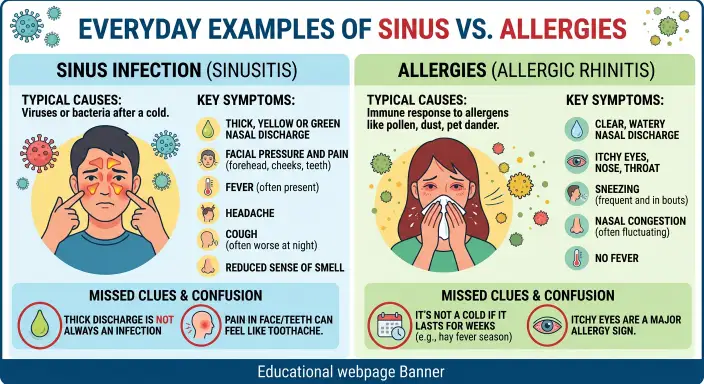
Here are some natural examples showing how these words are used.
Allergy Examples
- “My allergies get worse when pollen levels are high.”
- “She has itchy eyes because of her allergies.”
- “Dust can trigger my allergies.”
- “He takes allergy medicine during pollen season.”
Sinus Examples
- “I have pressure around my forehead and cheeks.”
- “My nose has been blocked for several days.”
- “The doctor said I may have sinusitis.”
- “My sinus symptoms started after a cold.”
In a Medical Context
- “The symptoms may be related to seasonal allergies.”
- “Persistent facial pressure may need medical evaluation.”
- “The patient has a history of recurrent sinusitis.”
When Could It Be More Likely to Be Allergies?
Allergies may be more likely when symptoms:
- Begin after exposure to a known trigger
- Return during a particular season
- Include itchy or watery eyes
- Include frequent sneezing
- Cause an itchy nose or throat
- Continue while exposure to the allergen continues
Seasonal allergies can last for several weeks, depending on the trigger and the person’s exposure.
When Could It Be More Likely to Be Sinusitis?
Sinusitis may be more likely when symptoms include:
- Facial pressure or pain
- A blocked nose
- Headache
- Postnasal drip
- Thick nasal discharge
- Reduced sense of smell
- Symptoms that developed after a cold
Acute sinusitis often improves without antibiotics, particularly when it is caused by a virus. A healthcare professional can determine if further evaluation or treatment is needed.
Treatment and Relief
Treatment depends on the cause.
For allergies, common approaches include reducing exposure to known triggers and using appropriate allergy treatments. Saline nasal sprays, antihistamines, and certain nasal sprays may help some people with allergy symptoms.
For sinusitis, treatment may depend on if the cause is viral, bacterial, or related to another condition. Many acute sinus infections improve on their own, so antibiotics are not automatically needed.
If symptoms are severe, persistent, repeatedly returning, or getting worse, it is a good idea to speak with a healthcare professional rather than trying to diagnose the cause yourself.
When Should You See a Doctor?
Consider medical advice if your symptoms:
- Keep returning
- Last longer than expected
- Become severe
- Get worse after initially improving
- Cause significant facial pain or pressure
- Are affecting your normal activities
Urgent medical attention may be needed for serious symptoms such as swelling or redness around the eyes, vision changes, confusion, or a very high fever.
This article is for general education and cannot determine the cause of an individual’s symptoms.
Allergies or Sinus : Google Trends & Usage Data
Searches for both sinus and allergies are common because people often experience similar nasal symptoms and want to understand their cause.
The search intent is slightly different:
- “Sinus” searches often relate to congestion, sinus pressure, headaches, sinus infections, or sinusitis.
- “Allergies” searches often relate to sneezing, itchy eyes, pollen, dust, and allergy symptoms.
- “Sinus or allergies” has comparison based intent because the searcher wants to understand which condition may better match their symptoms.
Search interest can change with seasons, weather, pollen exposure, and outbreaks of respiratory illnesses. Exact Google Trends numbers also change over time, so fixed figures should not be treated as permanent data.
Side by Side Comparison
| Feature | Allergies | Sinusitis |
| Main cause | Immune response to an allergen | Inflammation of the sinuses |
| Common triggers | Pollen, dust, mold, pet dander | Often follows a cold or respiratory infection |
| Sneezing | Very common | Less typical |
| Itchy eyes | Common | Less typical |
| Watery eyes | Common | Less typical |
| Nasal congestion | Common | Common |
| Facial pressure | Possible | Common |
| Headache | Possible | Common |
| Thick mucus | Less typical | Can occur |
| Fever | Usually absent | Can occur |
| Seasonal pattern | Common | Not necessarily seasonal |
| Can recur? | Yes | Yes |
| Treatment | Depends on allergy and symptoms | Depends on cause and severity |
People Also Ask
1. How can you tell if it is allergies or sinusitis?
Itchy eyes, frequent sneezing, and symptoms linked to allergens often point toward allergies. Facial pressure, pain, and symptoms after a cold may suggest sinusitis.
2. Can allergies cause sinus pressure?
Yes. Allergies can cause nasal inflammation and congestion, which may create pressure around the nose and face.
3. Is a stuffy nose more likely to be allergies or sinus?
A stuffy nose can occur with both. Other symptoms, timing, and duration provide more useful clues.
4. Do allergies cause facial pain?
Allergies can cause congestion and pressure, but significant facial pain is more commonly associated with sinusitis.
5. Are itchy eyes a sign of sinus problems?
Itchy or watery eyes are more commonly associated with allergies than sinus infections.
6. Can allergies turn into a sinus infection?
Allergies can contribute to nasal and sinus inflammation and may increase the risk of sinus problems, but not every allergy flare up becomes an infection.
7. Does green mucus always mean a sinus infection?
No. Mucus color alone does not reliably distinguish allergies from viral or bacterial sinus problems.
8. Can sinusitis happen without a fever?
Yes. Fever is not required for sinusitis, and many people with sinus symptoms do not have a fever.
9. How long can seasonal allergies last?
They can continue for several weeks or longer while a person remains exposed to the relevant allergen.
10. Should I see a doctor for ongoing sinus symptoms?
If symptoms are persistent, severe, repeatedly returning, or worsening, medical evaluation can help identify the underlying cause.
Conclusion
Sinus problems and allergies can feel very similar, but they are not the same thing. Allergies are caused by an immune response to allergens such as pollen, dust mites, mold, or pet dander. Sinusitis involves inflammation of the sinuses and may develop after a cold or another respiratory infection.
The symptoms can overlap, which is why it is easy to confuse them. Itchy or watery eyes, frequent sneezing, and symptoms linked to a specific allergen are common clues for allergies. Facial pressure, facial pain, headache, thick nasal discharge, and symptoms following a cold may point more toward sinusitis.
Still, no single symptom can always identify the cause. Mucus color, for example, is not enough to diagnose a bacterial sinus infection. Persistent or severe symptoms should be discussed with a healthcare professional.
Knowing these basic differences can help you understand common nasal symptoms and describe them more clearly when seeking medical advice.
Discover More Articles!
Meak or Meek: Which Spelling Is Correct?(2026)
Choose or Die: Meaning, Usage, and Correct Context
Impostor or Imposter: Which Spelling Is Correct?(2026)

Ethan Parker is an English-language writer known for his interest in words, language, and clear communication. His work focuses on making everyday English easier to understand through simple explanations and practical examples.