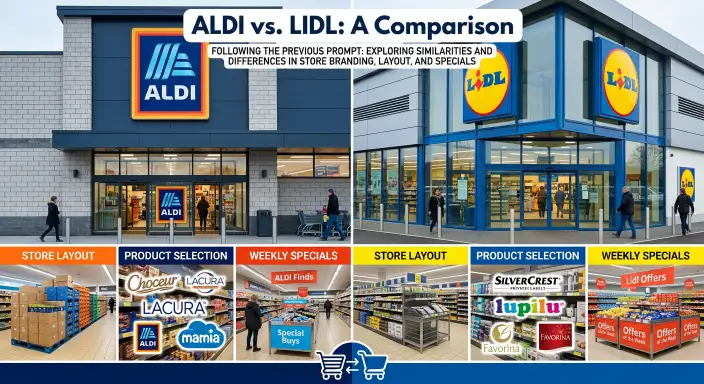
Aldi and Lidl are two discount supermarket chains known for offering groceries and everyday products at competitive prices. Both focus on helping customers save money, but they differ in store layouts, product ranges, shopping experience, and special offers.
If you want to reduce your grocery bill, you may wonder if Aldi or Lidl is the better choice. Both stores sell fresh food, pantry staples, household products, and selected non food items. Their prices and product availability can vary by country, location, and time of year.
Aldi is known for its simple shopping experience and strong focus on private label products. Lidl also offers many own brand products, along with bakery items in many stores and rotating weekly promotions.
In this guide, you will learn how Aldi and Lidl compare in prices, product selection, quality, shopping experience, and special offers. You will also discover which store may suit your shopping habits and budget.
Aldi or Lidl: Quick Answer
Aldi and Lidl are both discount supermarkets, and neither is always cheaper than the other. The better option depends on your local store, the products you buy, and the offers available.
Here is a quick comparison:
- Aldi: Known for a streamlined store layout and a strong range of own brand products.
- Lidl: Known for discount groceries, bakery options in many locations, and rotating weekly offers.
- For low prices: Compare the products you regularly buy at your local stores.
- For fresh bakery items: Lidl may be worth checking where its in store bakery is available.
- For special offers: Both retailers run promotions, although the products and schedules differ.
Prices, product ranges, and store features vary between countries, so checking your local stores is the best way to make a fair comparison.
Definition and Meaning
What Is Aldi?
Aldi is a discount supermarket brand with roots in Germany. The business developed into two main groups: Aldi Nord and Aldi Süd, which operate in different markets.
Aldi focuses heavily on own brand products, helping it keep its product range and shopping operations relatively simple. Stores commonly sell groceries, household essentials, and a changing selection of non food products.
Customers often choose Aldi for everyday shopping, including fruit, vegetables, dairy products, snacks, and pantry staples.
What Is Lidl?
Lidl is another discount supermarket chain that began in Germany. It operates across several European countries and other markets.
Lidl sells many own brand groceries, fresh food, household products, and seasonal items. Depending on the country and store, shoppers may also find an in store bakery and rotating weekly promotions.
Like Aldi, Lidl aims to provide value while keeping prices competitive.
The Origin of Aldi and Lidl
The History of Aldi
Aldi’s history dates back to a family grocery business in Germany. In 1961, the business was divided into Aldi Nord and Aldi Süd.
The name Aldi comes from Albrecht Diskont, combining the family name Albrecht with the German word Diskont, meaning discount.
Today, Aldi Nord and Aldi Süd operate under separate corporate structures and serve different markets.
The History of Lidl
Lidl developed from a German wholesale and grocery business and opened its first modern discount supermarket in Germany in 1973.
It later expanded across Europe and into other countries. Lidl became known for its discount pricing, own brand goods, and changing range of promotional products.
Both Aldi and Lidl helped shape the modern discount supermarket model.
British English vs American English
Aldi and Lidl are brand names, so their spelling does not change between British and American English. However, their store presence and product ranges differ by country.
| Feature | British English | American English |
| Aldi | Aldi | Aldi |
| Lidl | Lidl | Lidl |
| Store experience | Depends on location | Depends on location |
| Product range | Market specific | Market specific |
| Prices and promotions | Vary by store and region | Vary by store and region |
Aldi has a significant presence in the United States and the United Kingdom. Lidl is especially prominent across Europe and also operates in the United States. Availability depends on the local market.
Main Differences Between Aldi and Lidl
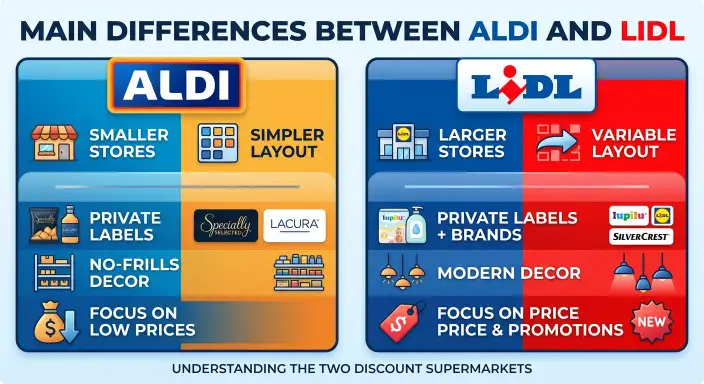
1. Prices and Value
Both supermarkets aim to offer lower prices than many traditional grocery retailers. However, one store is not guaranteed to be cheaper for every item.
Aldi may offer better value on some everyday staples, while Lidl may have better prices on other products or promotions. Brand comparisons, package sizes, and special offers can change the result.
Best approach: Compare unit prices for products you buy regularly instead of judging the stores by a single item.
2. Product Selection
Aldi generally focuses on a streamlined selection of products, many of which are sold under its own brands.
Lidl also has a large own brand range but may offer a different selection of international foods, bakery items, and seasonal products depending on the market.
Best approach: Visit the stores or check their local websites if you need specific ingredients or product types.
3. Fresh Bakery Items
Some Lidl stores have in store bakery sections with bread, pastries, and other baked goods. This can be a useful feature for shoppers who want fresh bakery products.
Aldi’s bakery offerings vary by country and store. Some locations may sell packaged baked goods rather than operating the same type of in store bakery.
Best approach: Check what your nearest stores actually offer before choosing one for bakery shopping.
4. Product Quality
Both supermarkets sell products across different categories, and quality can vary from item to item.
Aldi and Lidl each have own brand products that shoppers may prefer over alternatives at other stores. Personal taste, ingredients, freshness, and storage conditions can all affect the experience.
Best approach: Try products you use regularly and compare their quality and price.
5. Special Offers
Both retailers offer promotions and seasonal products. Lidl often promotes rotating weekly non food offers in many markets, while Aldi also sells limited time household goods, clothing, kitchen products, and other items.
The exact offers and schedules depend on the country and local store.
Best approach: Check each retailer’s current local catalogue or website before making a special trip.
6. Shopping Experience
Aldi often uses a simple store layout designed for efficient shopping. Product displays and packaging may be more straightforward than those in larger supermarkets.
Lidl also uses a discount store format but may have different layouts, bakery areas, and product displays.
Best approach: Choose the store that is easier to reach, has the products you need, and makes your regular shopping convenient.
When Should You Shop at Aldi?
Choose Aldi for Everyday Essentials
Aldi can be a good option for routine shopping if its prices and product range suit your household. You may find groceries, dairy products, snacks, frozen foods, and household basics in one place.
Choose Aldi for a Simple Shopping Trip
If you prefer a relatively straightforward shopping experience, Aldi’s streamlined product selection may suit you.
Choose Aldi for Own Brand Products
Aldi offers many products under its own labels. If you are comfortable trying supermarket brands instead of familiar national brands, these products may help you manage your budget.
When Should You Shop at Lidl?
Choose Lidl for Bakery Options
If your local Lidl has an in store bakery, it may be a convenient place to buy bread and pastries alongside your groceries.
Choose Lidl for Weekly Promotions
Lidl’s rotating offers can appeal to shoppers who enjoy exploring seasonal items, household goods, and other limited time products.
Choose Lidl for Its Product Selection
Depending on your local store, Lidl may offer particular international foods, fresh products, or own brand items that match your preferences.
Common Mistakes When Comparing Lidl and Aldi
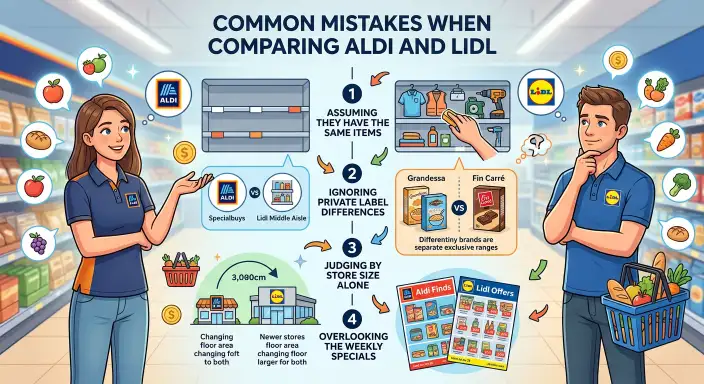
Mistake 1: Assuming Aldi Is Always Cheaper
Prices vary by product, store, and promotion. A fair comparison requires checking similar products and package sizes.
Mistake 2: Assuming Lidl Is Always Better for Quality
Product quality depends on the item. One retailer may be preferred for certain foods, while the other may offer products a shopper likes more.
Mistake 3: Comparing Different Package Sizes
A larger pack may cost more but offer a lower price per unit. Check the price per kilogram, litre, or item when available.
Mistake 4: Ignoring Travel Costs
A slightly cheaper grocery bill may not be worthwhile if the store is much farther away. Consider travel time and transport costs as well.
Mistake 5: Expecting Every Store to Have the Same Products
Aldi and Lidl adapt their product ranges to local markets. Store sizes, bakery facilities, and promotional items can vary by location.
Everyday Examples: Aldi vs Lidl?
Example 1: Weekly Grocery Shopping
A family wants to buy milk, eggs, bread, fruit, and vegetables.
Possible choice: Either store. Compare local prices and choose the one that offers the best value for the items you need.
Example 2: Buying Fresh Pastries
A shopper wants freshly baked bread and pastries.
Possible choice: Lidl may be convenient if the nearby store has an in store bakery. Check the actual facilities at your local branch.
Example 3: Finding a Household Bargain
Someone needs a kitchen accessory or a small household item.
Possible choice: Check both stores’ current promotions because limited time products vary.
Example 4: Shopping on a Tight Budget
A student wants to keep food costs low.
Possible choice: Compare unit prices, plan meals, and buy only what is needed. Either supermarket may offer good value depending on the shopping list.
Aldi vs. Lidl: Comparison Table
| Feature | Aldi | Lidl |
| Main focus | Discount groceries | Discount groceries |
| Own brand products | Extensive range | Extensive range |
| Prices | Competitive; vary by item | Competitive; vary by item |
| Bakery | Depends on location | In store bakeries in many locations |
| Weekly offers | Yes | Yes |
| Non food bargains | Seasonal and limited time products | Seasonal and limited time products |
| Store layout | Often simple and streamlined | Varies; may include bakery areas |
| Best choice | Depends on local prices and needs | Depends on local prices and needs |
A Simple Trick to Remember the Difference
Use this easy rule:
- Aldi: A strong option for everyday discount groceries and own brand products.
- Lidl: Another strong discount option, with bakery sections and rotating promotions in many locations.
- Both: Compare local prices and product availability before deciding.
The best supermarket is not always the same for everyone. Your shopping list and nearest store matter more than the brand name alone.
FAQs About Aldi or Lidl
1. Is Aldi cheaper than Lidl?
Not always. Prices vary by product, location, package size, and promotion. Compare the items you regularly buy to see which store offers better value.
2. Is Lidl better than Aldi?
Neither supermarket is universally better. Aldi may suit shoppers who prefer its product range and store layout, while Lidl may appeal to those who want its bakery options or weekly promotions.
3. Are Aldi and Lidl the same company?
No. Aldi Nord, Aldi Süd, and Lidl are separate businesses. Aldi Nord and Aldi Süd are also separate corporate groups that operate in different markets.
4. Which supermarket has better food quality?
Quality depends on the product and personal preference. Comparing ingredients, freshness, taste, and price can help you decide which store suits you best.
5. Does Lidl have a bakery?
Many Lidl stores have in store bakery sections, but facilities differ by country and location. Check your local store for current details.
6. Does Aldi sell its own brands?
Yes. Aldi relies heavily on own brand products across many grocery and household categories.
7. Does Lidl sell non food products?
Yes. Many Lidl stores offer limited time non food items, including household products and seasonal goods. The selection changes over time and by market.
8. Which is better for weekly grocery shopping?
Either can work well. Compare the prices and quality of your regular shopping list, then consider convenience and travel costs.
9. Are Aldi and Lidl available in the United States?
Yes. Aldi and Lidl both operate in the United States, although store coverage and product availability vary by region.
10. How can I save money at Aldi or Lidl?
Plan your meals, compare unit prices, check current offers, use products before they expire, and avoid buying unnecessary items just because they are discounted.
Conclusion
Aldi and Lidl are both popular discount supermarket chains that help shoppers find groceries and everyday products at competitive prices.
Aldi is known for its streamlined shopping experience and extensive own brand range. Lidl offers its own broad selection of discount products, with bakery sections and rotating promotions in many locations.
Neither retailer is always cheaper or better for every shopper. Prices, product quality, special offers, and store features vary by location and by item. A useful comparison starts with your regular shopping list and the prices at your nearest branches.
If you mainly want everyday groceries, both stores are worth considering. If you want bakery items or limited time bargains, check what your local Lidl offers. You prefer Aldi’s range and shopping layout, it may be the more convenient choice.
The smartest option is to compare prices, buy what you need, and choose the store that gives you the best overall value.
Discover More Articles!
Wasp or Bee: How to Tell the Difference
Awakened or Awoken: Which Word Is Correct?(2026)
Hydrate or Die: Meaning, Usage, and What It Really Means

Ethan Parker is an English-language writer known for his interest in words, language, and clear communication. His work focuses on making everyday English easier to understand through simple explanations and practical examples.