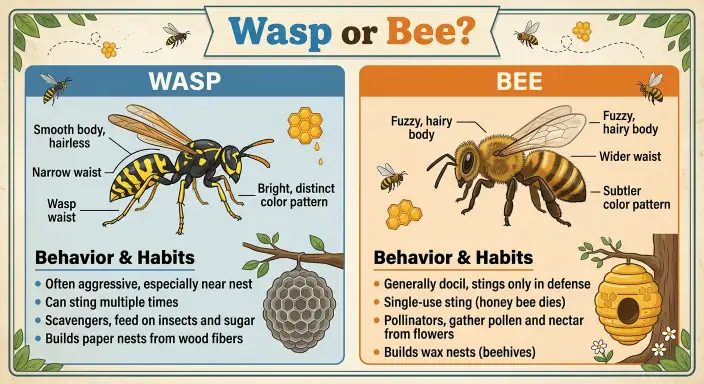
Bees and wasps are different insects, although they can look similar at first. Bees are often hairy and help pollinate flowers, while wasps usually have smoother bodies and may hunt other insects. Both play important roles in nature, but their behavior and diets can differ.
You may see a bee or wasp near flowers, gardens, outdoor meals, or rubbish bins. Because these insects can have similar colors, it is not always easy to identify them. Knowing the difference can help you understand their behavior and avoid disturbing them.
Bees often collect nectar and pollen to feed themselves and their young. Many wasps hunt insects or search for sugary foods, although their diets vary by species. Some bees and wasps can sting when threatened, so it is best to observe them from a safe distance.
In this guide, you will learn how to identify a bee or wasp, compare their appearance and behavior, understand their roles in nature, and recognize common misconceptions.
Wasp or Bee: Quick Answer
Bees are usually hairier and are important pollinators, while wasps often have smoother bodies and may hunt other insects.
Here are the main differences:
- Bee: Often has a rounder, hairier body and collects pollen and nectar.
- Wasp: Often has a smoother body, a narrow waist, and a more varied diet.
- Bee behavior: Many bees focus on flowers and avoid people unless disturbed.
- Wasp behavior: Some wasps hunt insects, while others visit food and drinks.
- Stinging: Some species of both groups can sting.
These are general clues. There are many different species, so not every bee or wasp looks or behaves the same way.
Definition and Meaning
What Is a Bee?
A bee is a flying insect in the superfamily Apoidea. Many bee species visit flowers to collect nectar and pollen. As they move between flowers, they help transfer pollen and support plant reproduction.
Honeybees and bumblebees are familiar examples, but thousands of bee species exist around the world. Some live in colonies, while many others live alone.
Bees vary in size, color, and appearance. Many have hairy bodies that help them collect pollen.
Examples:
- A honeybee collects nectar from flowers.
- A bumblebee visits flowers in a garden.
- A solitary bee builds a nest without a large colony.
What Is a Wasp?
A wasp is an insect belonging to the group Hymenoptera, which also includes bees and ants. Wasps come in many forms, including social species that live in colonies and solitary species that live alone.
Many wasps have relatively smooth bodies and a narrow waist between the thorax and abdomen. Some hunt insects or spiders, while others feed on nectar, fruit, or sugary foods.
Examples:
- A paper wasp builds a nest from a paper like material.
- A yellowjacket may visit an outdoor meal.
- A solitary wasp may hunt insects to feed its young.
Wasps are not all aggressive. Their behavior depends on the species and the situation.
The Origin of Bee and Wasp
Origin of the Word Bee
The word bee comes from Old English bēo. It has been used for centuries to describe these familiar insects.
Today, the word covers many species, including honeybees, bumblebees, and solitary bees.
Origin of the Word Wasp
The word wasp comes from Old English wæps or related early forms. It has long been used for insects that belong to the wasp group.
Although bees and wasps are related, the words refer to different groups of insects with different habits and ecological roles.
British English vs American English
The words bee and wasp have the same spelling and basic meanings in British and American English. However, some common names for particular wasps differ by region.
| Feature | British English | American English |
| Bee | Bee | Bee |
| Wasp | Wasp | Wasp |
| Yellowjacket | Used less commonly for local species | Common name for certain wasps |
| Bumblebee | Bumblebee | Bumblebee |
| Main spelling difference | None | None |
The names used for individual species may vary, but the general difference between a bee and a wasp remains the same.
Main Differences Between Wasps and Bees
1. Body Shape and Hair
Many bees have rounder, hairier bodies. Their body hairs can help collect pollen from flowers.
Wasps often have smoother bodies and a more noticeable narrow waist. However, body shape varies across species, so appearance alone is not always enough for identification.
2. Diet
Bees commonly collect nectar and pollen. Nectar provides energy, while pollen supplies nutrients needed by many bees and their young.
Many wasps eat other insects or spiders, helping control their populations. Some also feed on nectar, fruit, or sugary human foods.
3. Role in Nature
Bees are important pollinators. Their visits help many flowering plants reproduce, including some crops.
Wasps also provide ecological benefits. Predatory species help control other insect populations, and some wasps contribute to pollination when they visit flowers.
4. Nesting Habits
Honeybees live in colonies and build wax combs. Bumblebees often establish smaller colonies, while many other bees nest alone in soil, wood, or plant stems.
Some social wasps build nests from a paper like material. Other wasps nest underground or live alone in small shelters.
5. Behavior Around People
Many bees focus on flowers and generally do not seek contact with people. They may sting if they feel threatened or their nest is disturbed.
Some wasps are more likely to investigate sugary foods and drinks, especially during warmer months. Social wasps may defend their nests, so it is best to keep a respectful distance.
6. Stinging
Some bees and wasps can sting, but their stinging behavior differs by species. Honeybees usually sting in defense and often die after stinging a person because their barbed stinger becomes lodged in the skin.
Many wasps can sting more than once. However, not every bee or wasp has the same defensive behavior.
A sting from either insect can cause a serious allergic reaction in some people. Seek emergency medical help if someone develops breathing difficulty, swelling of the tongue or throat, or other signs of a severe allergic reaction.
When Should You Identify a Bee?
When You See an Insect on Flowers
An insect with a hairy body that repeatedly visits flowers may be a bee. It may be collecting nectar or pollen.
Bees can be valuable visitors in gardens because they help pollinate many plants.
When You Notice a Nest
If you see many bees entering and leaving one area, there may be a colony or nesting site nearby. Avoid disturbing it.
If a nest is close to people or inside a building, contact a qualified local professional for advice rather than attempting to remove it yourself.
When You Want to Support Pollinators
Planting a variety of flowering plants and avoiding unnecessary pesticide use can help many pollinators. Leave nesting areas undisturbed where practical, and seek expert advice if a nest creates a safety concern.
When Should You Identify a Wasp?
When an Insect Visits Food
Wasps may be attracted to sugary drinks, ripe fruit, or food left outdoors. Keep food covered and avoid sudden movements around them.
When You Notice a Nest
Some wasps build visible paper like nests, while others nest underground or in hidden spaces. Do not touch or approach a nest closely.
If wasps are nesting near a doorway, play area, or busy part of a building, seek professional advice about safe management.
When You See a Wasp Hunting
Some wasps catch insects or spiders to feed themselves or their young. This makes them useful in many ecosystems, even when their presence near people is inconvenient.
Common Mistakes About Bees and Wasps
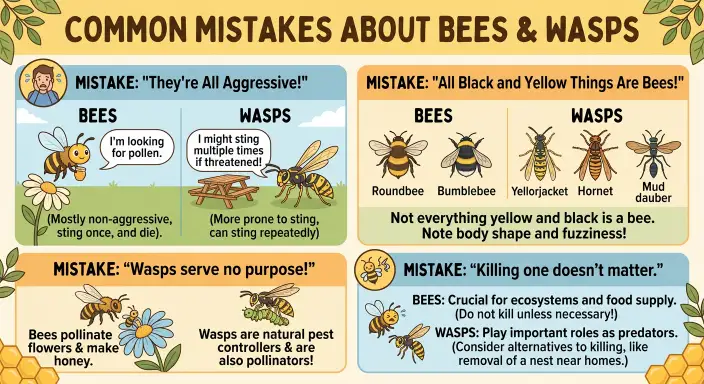
Mistake 1: Thinking All Bees Produce Honey
Only certain bee species produce honey in the familiar way. Most bee species do not make honey in large quantities for human use.
Mistake 2: Thinking All Wasps Are Aggressive
Wasps have different behaviors. Many solitary species rarely interact with people, while some social species defend their nests.
Mistake 3: Assuming Every Yellow and Black Insect Is a Wasp
Some bees and other insects also have yellow and black markings. Look at body shape, hair, behavior, and other features rather than color alone.
Mistake 4: Believing Wasps Have No Benefits
Many wasps help control insect populations. Some also contribute to pollination, making them useful parts of ecosystems.
Mistake 5: Trying to Identify an Insect by Getting Too Close
A close inspection is not worth the risk of disturbing a nest or provoking a sting. Observe from a safe distance and use a photograph taken without approaching the insect.
Everyday Examples of Wasps and Bees
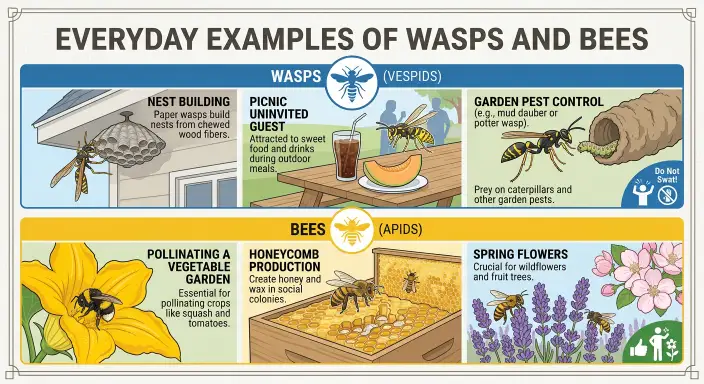
Example 1: An Insect Visiting Flowers
A hairy insect moves from flower to flower, collecting pollen.
What it may be: A bee, although other insects can also visit flowers.
Example 2: An Insect Near a Sweet Drink
A smooth bodied insect with a narrow waist lands near an outdoor drink.
What it may be: A wasp, particularly a species attracted to sugary food.
Example 3: An Insect Carrying Pollen
A small insect has visible pollen on its body as it visits flowers.
What it may be: A bee, since many bees collect pollen to feed themselves or their young.
Example 4: An Insect Carrying Prey
An insect catches another insect and carries it away.
What it may be: A predatory wasp, although some other insects also hunt prey.
These examples provide useful clues, but they do not guarantee an identification.
Wasp vs. Bee: Comparison Table
| Feature | Bee | Wasp |
| Typical appearance | Often hairy and rounder | Often smoother with a narrow waist |
| Common food | Nectar and pollen | Insects, nectar, fruit, or sugary foods, depending on species |
| Pollination | Major role for many species | Some species also pollinate |
| Nest types | Wax combs, soil, wood, or plant stems | Paper nests, underground nests, or solitary shelters |
| Social behavior | Some live in colonies; many live alone | Some live in colonies; many live alone |
| Stinging | Some species can sting | Some species can sting |
| Ecological benefit | Pollination | Pest control and sometimes pollination |
A Simple Trick to Remember the Difference
Use this easy rule:
- Bee = often hairy and associated with flowers.
- Wasp = often smoother and may hunt insects.
Remember that these are general clues, not perfect rules. Some bees have little visible hair, and many wasps also visit flowers.
The safest approach is to observe the insect from a distance instead of trying to handle it.
FAQs About Wasp or Bee
1. What is the main difference between a wasp and a bee?
Bees are often hairier and commonly collect pollen and nectar. Wasps are often smoother and many hunt other insects, although diets and appearances vary by species.
2. Which is more aggressive, a wasp or a bee?
It depends on the species and situation. Some social wasps strongly defend their nests, while bees may sting when threatened. Neither group should be disturbed.
3. Do both bees and wasps sting?
Some species of both groups can sting. Their behavior differs, and not all species have the same ability to sting.
4. Can wasps pollinate flowers?
Yes. Some wasps visit flowers and transfer pollen. Bees are major pollinators, but wasps can also contribute to pollination.
5. Do wasps make honey?
Most wasps do not produce honey like honeybees. Their diets vary, and many species hunt insects or feed on nectar and other sugary substances.
6. Why are wasps attracted to sugary drinks?
Some wasps feed on sugary substances for energy. Sweet drinks, fruit, and uncovered food can attract them, especially during warmer weather.
7. Why are bees important?
Bees pollinate many flowering plants and crops. Their activity supports plant reproduction, biodiversity, and food production.
8. Are wasps useful to the environment?
Yes. Many wasps help control insect populations, and some contribute to pollination. They play important roles in natural food webs.
9. How can I tell a bee from a wasp?
Look for general clues such as body hair, body shape, and behavior. Bees are often hairier, while wasps are often smoother with a narrow waist. These clues are not always conclusive.
10. What should I do if I find a wasp or bee nest?
Keep your distance and do not disturb the nest. If it is close to people or a building, contact a qualified local professional for advice. Seek emergency medical help if a sting causes signs of a severe allergic reaction.
Conclusion
Bees and wasps are related insects, but they have different characteristics and habits. Bees are often hairy and are important pollinators, while many wasps have smoother bodies and help control other insect populations. Both groups contribute to the natural environment.
The easiest way to remember the difference is to look at their general appearance and behavior from a safe distance. A hairy insect collecting pollen may be a bee, while a smoother insect with a narrow waist may be a wasp. However, these clues are not enough to identify every species with certainty.
Both bees and wasps can sting, so avoid touching them or disturbing their nests. If a nest is creating a safety concern, seek professional advice. Understanding these insects helps you recognize their roles in nature and respond more safely when you encounter them.
Discover More Articles Here!
Your vs You’re: Meaning, Differences, and Examples(2026)
Tons or Tonnes: What Is the Difference?(2026)
Lose vs Loose: Meaning, Difference, and Examples(2026)

Ethan Parker is an English-language writer known for his interest in words, language, and clear communication. His work focuses on making everyday English easier to understand through simple explanations and practical examples.